
What to Know
- Gold surged from below $4,000 an ounce to above $4,700 in less than four weeks, a move of more than $700 and approximately 18% from its recent low.
- Copper recently reached $14,343 a metric tonne on the London Metal Exchange, close to its all-time record high.
- Brent crude returned above $90 a barrel as Middle Eastern tensions renewed concern over global supply and shipping through the Strait of Hormuz.
- Central banks bought a net 289 tonnes of gold in the second quarter, 62% more than a year earlier and the strongest second quarter on record.
- The International Energy Agency expects copper demand to rise by roughly 7 million tonnes through 2040, while current project pipelines point to a supply gap of around 25% by 2035.
- The U.S. Strategic Petroleum Reserve has fallen to 286.6 million barrels, its lowest level since November 1982.
- The UN Food and Agriculture Organization’s Food Price Index climbed to 131.1 points in July, while its Cereal Price Index rose 3.4% in a single month and 6.9% year-on-year.
- Market participants are increasingly treating commodities as a connected macro trade driven by scarcity, energy security, monetary diversification and geopolitical fragmentation.
Hard Assets Are No Longer Moving in Isolation
Hard assets are drawing renewed attention as price action across metals, energy and agriculture begins to look less like a series of separate rallies and more like a connected macro regime. The shift has become especially visible in August 2026, when major commodity markets showed simultaneous strength across gold, copper, Brent crude and food-linked benchmarks. For traders, the important question is no longer whether one commodity has found a temporary bid. It is whether a deeper repricing of scarcity is now underway across the real-asset complex.
FXCOINZ market coverage suggests that the breadth of the move is the central story. Gold has acted as a monetary signal, copper has highlighted industrial and electrification constraints, oil has put energy security back at the center of inflation risk, and agriculture has begun to reflect climate, logistics and production stress. Each market has its own drivers, but together they are forming a more powerful narrative: investors are reconsidering the value of finite, physical assets in an environment shaped by fiscal stress, resource bottlenecks and geopolitical fragmentation.
Gold’s Rally Signals More Than Inflation Fear
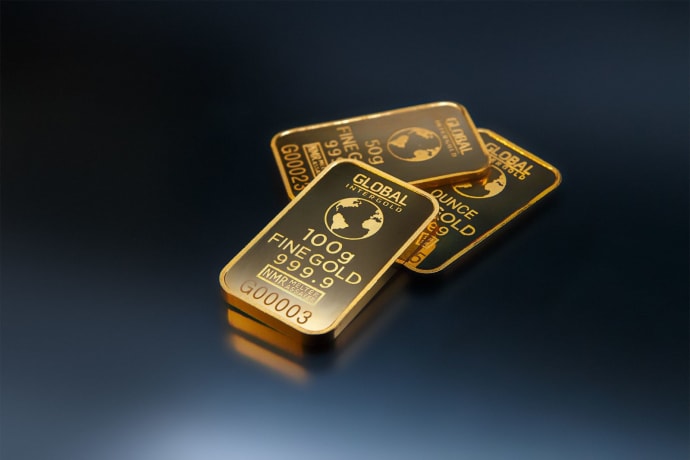
Gold’s latest advance has been striking. The metal climbed from below $4,000 an ounce to above $4,700 in less than four weeks, delivering a move of more than $700 and approximately 18% from its recent low. That scale of acceleration has reinforced the view among some chart watchers that gold is doing more than responding to short-term inflation expectations. It is increasingly being interpreted as a signal of monetary diversification and concern over sovereign balance sheets.
Central-bank activity has added weight to that interpretation. Reserve managers purchased a net 289 tonnes of gold in the second quarter, according to the World Gold Council, a figure 62% above the same period a year earlier and the strongest second quarter on record. When official-sector buyers increase exposure to gold while sovereign debt burdens remain elevated, traders often read the move as structural rather than tactical. Gold’s role as an inflation hedge remains important, but its role as a reserve asset is becoming just as central to the market conversation.
For FXCOINZ readers, the gold rally matters because it sits at the intersection of policy, debt, currency confidence and portfolio protection. A strong move in gold can sometimes be dismissed as a defensive reaction. In the current setting, however, the combination of central-bank demand and rapid price appreciation suggests that parts of the market are reassessing the monetary function of hard assets. That does not guarantee a straight-line continuation, but it does explain why dips may attract attention from investors seeking exposure to assets outside the traditional sovereign-debt framework.
Copper Is Turning Scarcity Into a Market Signal
If gold is reflecting monetary scarcity, copper is reflecting physical scarcity. The metal recently reached $14,343 a metric tonne on the London Metal Exchange, placing it close to its all-time record high. The move is being watched closely because copper sits at the heart of electrification, grid expansion, electric vehicles, renewable infrastructure and artificial intelligence-related power demand. Unlike financial assets, copper supply cannot be expanded quickly when prices rise. New mine development requires permitting, financing, construction and operational ramp-up, all of which can take years.
The International Energy Agency expects copper demand to increase by roughly 7 million tonnes through 2040. Yet, based on the current project pipeline, it still projects a supply gap of around 25% by 2035. That mismatch between fast-moving demand and slow-moving supply is one of the clearest examples of why hard assets are being repriced. Demand connected to power infrastructure can accelerate as governments, companies and data-driven industries expand capacity. Meaningful new supply, by contrast, tends to arrive only after long investment cycles.
Technical traders and commodity investors are therefore watching copper as both an industrial metal and a macro indicator. When copper rises sharply, it can signal expectations for infrastructure demand, manufacturing stress, electrification needs or supply tightness. In the current market, the supply side may be the more important force. If demand from grids, electric vehicles, renewables and artificial intelligence continues to rise while mine supply remains constrained, copper could remain one of the most closely watched assets in the broader hard-asset rotation.
Energy Security Returns to the Inflation Debate
Brent crude’s move back above $90 a barrel at the end of August has renewed focus on energy security. Middle Eastern tensions have revived concern over global supply and shipping through the Strait of Hormuz, a critical route for oil flows. At the same time, the U.S. Strategic Petroleum Reserve has fallen to 286.6 million barrels, its lowest level since November 1982. Those figures have intensified the sense that the energy market has less room for error if geopolitical risk disrupts supply.
Oil matters far beyond the fuel market. Higher energy costs can feed directly into mining, transportation, manufacturing, fertilizer production and food distribution. That is why energy is often described by market participants as a multiplier within the commodity complex. A tighter oil market can increase the cost of extracting metals, transporting raw materials and producing agricultural inputs. In that sense, an energy shock does not remain isolated inside crude benchmarks. It can migrate into broader inflation pressure and reinforce the hard-asset trade.
For traders, Brent’s return above $90 a barrel is important not only because of the price level itself, but because of what it represents. Energy security has re-entered the market narrative at the same time that metals and agricultural commodities are already showing signs of tightness. When oil strengthens alongside gold and copper, the result is a broader message about real-world constraints. The market is not just pricing demand; it is also pricing the vulnerability of supply chains, reserves and shipping routes.
Agriculture Becomes Part of the Scarcity Trade
Agriculture is also moving into the hard-asset discussion. The UN Food and Agriculture Organization’s Food Price Index climbed to 131.1 points in July, while its Cereal Price Index rose 3.4% in a single month and 6.9% year-on-year. Those increases matter because food commodities sit at the intersection of weather, geopolitics, energy costs and logistics. When agricultural markets tighten, the impact can spread quickly from futures markets into consumer inflation, trade policy and food-security concerns.
Pressure is visible across several producing regions. Heat and flooding have affected corn, soybean and cotton in China. Drought has reduced grain and livestock-feed availability across parts of Europe. Ivory Coast faces a delayed cocoa crop, while disruption around Black Sea export routes continues to threaten global grain flows. None of these developments alone defines the entire agricultural market, but together they reinforce a broader theme: availability risk is becoming more important than current inventory comfort.
Some market participants believe agriculture may become one of the more underestimated macro trades heading into 2027. That view rests on the idea that food markets can reprice quickly when buyers shift from focusing on today’s supply to worrying about tomorrow’s availability. Agricultural commodities are especially sensitive because production cycles cannot always adjust rapidly. Weather, planting decisions, fertilizer costs, shipping access and political restrictions can all shape supply outcomes, often with limited warning.
Why the Commodity Rotation Is Broadening
The current hard-asset rotation is broad because the underlying pressures are broad. Fiscal stress supports gold’s monetary role. Electrification and infrastructure demand support copper’s strategic importance. Geopolitical tensions and reserve depletion support energy-security concerns. Weather events and logistics disruptions support agricultural volatility. The common thread is scarcity, whether monetary, physical, logistical or geopolitical.
This is why traders are increasingly cautious about treating each rally as isolated. In earlier market phases, a gold surge might have been explained by inflation fears alone, while an oil rally might have been treated as a supply headline and a copper move as an industrial demand signal. In the current environment, those explanations overlap. Expensive energy affects mining and agriculture. Copper demand is linked to electricity and infrastructure. Gold demand is linked to trust in sovereign balance sheets and reserves. Agriculture is linked to energy inputs, weather and trade routes.
That interaction is what makes the 2026 hard-asset theme important. A genuine macro regime does not depend on a single catalyst. It develops when multiple markets begin responding to different expressions of the same underlying pressure. In this case, that pressure is the repricing of scarcity across resources that are difficult to create, substitute or transport without cost.
The Window Before Consensus
Some traders argue that the largest gains in secular commodity moves are rarely captured by investors who wait until consensus is complete. The challenge is that macro regimes often become obvious only after the earliest opportunities have passed. By the time every participant agrees that a structural hard-asset repricing is underway, price levels may already reflect much of that conviction.
That does not mean traders should ignore risk. Gold, copper, oil and agricultural commodities can all be volatile, and sharp rallies often invite corrections. However, FXCOINZ notes that the broader setup is increasingly difficult to dismiss. Gold has broken sharply higher, copper is close to record territory, Brent is back above a key psychological threshold, and food-market indicators are rising alongside regional supply disruptions. The rotation is not narrow; it is expanding.
The central market question is whether August 2026 will be remembered as a late-stage burst of commodity enthusiasm or as the point when the hard-asset trade became a recognized macro regime. The evidence is still developing, but the breadth of price action suggests traders are no longer looking only at isolated supply shocks. They are watching a wider repricing of real assets in a world where monetary confidence, physical supply and geopolitical stability are all under scrutiny.
Frequently Asked Questions (FAQs)
Why are hard assets gaining attention in 2026?
Hard assets are gaining attention because gold, copper, Brent crude and agricultural markets are rising together as traders focus on scarcity, energy security, monetary diversification and geopolitical fragmentation.
How much has gold moved recently?
Gold moved from below $4,000 an ounce to above $4,700 in less than four weeks, a gain of more than $700 and approximately 18% from its recent low.
Why are central banks important for the gold market?
Central banks bought a net 289 tonnes of gold in the second quarter, 62% more than a year earlier and the strongest second quarter on record, reinforcing the view that gold is being used for monetary diversification.
What is driving concern in the copper market?
Copper demand is expected to rise by roughly 7 million tonnes through 2040, while current project pipelines point to a supply gap of around 25% by 2035, creating concern that new supply may not keep up with demand.
Why does Brent crude above $90 matter?
Brent crude above $90 a barrel matters because it reflects renewed energy-security concerns, especially as Middle Eastern tensions affect shipping risk through the Strait of Hormuz.
What is the significance of the U.S. Strategic Petroleum Reserve level?
The U.S. Strategic Petroleum Reserve has fallen to 286.6 million barrels, its lowest level since November 1982, which may reduce perceived supply flexibility during periods of energy-market stress.
How is agriculture connected to the hard-asset trade?
Agriculture is connected through food-price pressure, weather disruptions, energy input costs and logistics risks, with the Food Price Index at 131.1 points in July and the Cereal Price Index rising 3.4% in a single month.
Does this mean commodity prices will keep rising?
Not necessarily. Commodity markets can correct sharply, but the broad movement across metals, energy and agriculture suggests many traders are treating the current setup as more than a short-term rally.