
What to Know
- Market participants are focusing on 2026 because scarcity premiums are appearing across energy, agriculture, metals and critical materials.
- On October 6, Chevron’s chief executive said the landed price of physical oil in Asia was closer to $150 a barrel than $100.
- Vitol has warned about tanker shortages and the risk of $200 a barrel oil, although that remains an upside risk scenario rather than a certain outcome.
- Middle East to Asia supertanker rates reached approximately $1.4 million per day in October, compared with roughly $30,000 in January.
- Transporting oil from the United States to China has reached $80 million per voyage, above the advertised $74 million price of launching a SpaceX Falcon 9 rocket.
- The Breakwave Tanker Shipping ETF has surged 7,051% over the past 12 months, while the S&P 500 has gained 14.4% over the same period.
- The U.S. Energy Information Administration forecast in its October outlook that households using heating oil would spend approximately 21% more this winter than last winter.
- On October 2, G7 governments agreed to release 100 million barrels of oil and fuel reserves over four months, with substantial diesel deliveries prioritised within the first 20 days.
Scarcity Premiums Move Across the Commodity Complex
The hard asset debate is shifting from a narrow discussion about individual commodity prices to a broader examination of physical access, transportation capacity and supply chain reliability. FXCOINZ market coverage shows that the current focus on oil is not only about the price quoted on a trading screen. It is increasingly about whether a buyer can secure a usable cargo, move it across constrained routes and receive it at the destination at a cost that still makes economic sense.
That distinction matters because scarcity premiums are appearing across energy, agriculture, metals and critical materials at the same time. When tightness is isolated to one market, traders may view it as a temporary disruption. When tightness appears across several essential inputs simultaneously, some market participants interpret it as evidence of a broader regime shift. In that environment, the concept of value changes. Ownership of the physical resource, or exposure to the infrastructure that moves it, can become more important than headline benchmark pricing alone.
Physical Oil Costs Challenge Screen Prices
Oil markets are highlighting the difference between paper benchmarks and delivered reality. On October 6, Chevron’s chief executive said the landed price of physical oil in Asia was closer to $150 a barrel than $100. For importers, refiners and industrial users, that is a critical distinction. The price that matters is not only the benchmark quotation. It is the total cost of securing a cargo, financing it, insuring it, transporting it and delivering it where it can be used.
When delivered barrels command large premiums, the signal is that immediate access to supply has become unusually valuable. Traders often watch such physical market signals closely because they can reveal stress before it is fully reflected in broader market narratives. A benchmark may suggest one level of tightness, while landed prices can reveal another. This is especially important in regions where demand is strong, inventories are less comfortable, or transport routes are under strain.
Vitol has also warned about tanker shortages and the risk of $200 a barrel oil. FXCOINZ stresses that this is an upside risk scenario, not a guaranteed destination. The point is not that oil must move to that level. The point is that the market is now discussing outcomes that would previously have seemed extreme, because access to transport and deliverable supply has become a major variable in pricing.
The New Shortage Is Not Just Barrels
The oil market is discovering that a shortage can emerge even when the underlying resource still exists. Barrels in the ground, barrels in storage and barrels available at the right location are not the same thing. If the vessels, routes, ports or refining systems required to move and process those barrels are constrained, the effective supply available to buyers can shrink quickly.
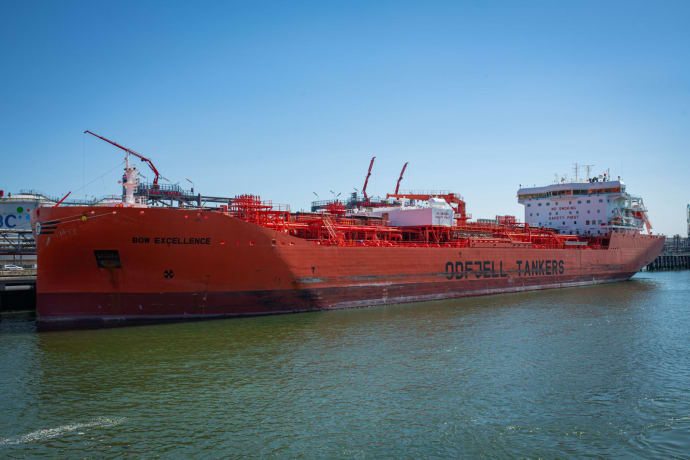
According to GSC Commodity Intelligence’s October report, Middle East to Asia supertanker rates reached approximately $1.4 million per day, compared with roughly $30,000 in January. That is nearly 47 times as much. Such a move changes the economics of trade flows. A cargo that looked profitable under normal freight conditions can become unattractive when shipping costs surge. Buyers may be forced to pay up, delay purchases, seek alternative suppliers or pass costs along through the value chain.
Another major route shows the same problem. Transporting oil from the United States to China has reached $80 million per voyage, exceeding the advertised $74 million price of launching a SpaceX Falcon 9 rocket. That comparison illustrates how extreme freight costs have become. It also shows why infrastructure is now part of the scarcity story. The market may have access to oil in one region, yet struggle to deliver it efficiently to another.
Shipping Bottlenecks Become a Market Theme
The financial market reaction has been striking. The Breakwave Tanker Shipping ETF has surged 7,051% over the past 12 months, according to data tracked by GSC Commodity Intelligence. Over the same period, the S&P 500 has recorded a gain of 14.4%. A $100,000 investment in the tanker shipping fund made a year ago would have grown to approximately $7.15 million.
Those figures do not mean the same performance can or will be repeated. They do, however, show how aggressively capital can move when investors identify a bottleneck at the center of a global supply chain. In a scarcity driven market, the assets that benefit may not be limited to the raw materials themselves. Ships, storage, refining capacity, processing facilities and logistics networks can all become valuable because they determine whether a commodity can reach the consumer in usable form.
This is why some chart watchers describe the current environment as a scarcity trade rather than a simple commodity rally. The theme includes physical resources, but it also includes the channels through which those resources travel. If the world has oil but cannot move it efficiently, then transportation capacity becomes part of the commodity’s effective supply.
Diesel Pressure Reaches Households and Industry
The scarcity theme is also moving from trading desks into the real economy. Diesel is especially important because it powers trucks, farms, mines and supply chains. When diesel reprices, the cost of moving goods can rise across a wide range of sectors. That can affect food, construction, manufacturing and retail distribution, even when consumers are not directly following energy markets.
In its October outlook, the U.S. Energy Information Administration forecast that households using heating oil would spend approximately 21% more this winter than last winter. That forecast underscores how energy tightness can show up in household budgets. Heating oil, diesel and related distillate markets are closely watched because they connect the commodity complex to everyday economic activity.
Policy makers have responded to pressure in the fuel market. On October 2, G7 governments agreed to release 100 million barrels of oil and fuel reserves over four months, prioritising substantial diesel deliveries within the first 20 days. Reserve releases can provide relief during periods of stress. They can help bridge immediate shortages, calm panic buying and improve near term availability. But they cannot instantly repair damaged infrastructure, create permanent refining capacity or guarantee that transport networks operate smoothly.
Why Hard Assets Are Back in Focus
The renewed focus on hard assets reflects a simple but powerful idea. Financial liquidity can be created quickly, while physical supply often cannot. Governments can adjust policy and central banks can change interest rates, but neither can instantly create another barrel of oil, another tonne of copper or a functioning refinery. That difference becomes more important when demand for essential inputs is rising across multiple sectors.
Energy powers industry. Agriculture depends on fuel and fertilisers. Electrification requires copper and silver. Artificial intelligence demands electricity and critical materials. Each of those themes draws on the physical economy. If investment in supply, processing and infrastructure has lagged demand, scarcity premiums can emerge and persist.
Market participants who are focused on the hard asset decade thesis argue that the world spent years pricing abundance and may now be forced to price scarcity. That does not mean every commodity rises in a straight line. It does not eliminate volatility, corrections or policy intervention. It does suggest that the underlying market structure may be changing, with a higher premium attached to essential physical resources and the systems required to deliver them.
What the Scarcity Trade Means for Investors
For investors, the key question is no longer just how far commodities have already risen. It is whether the scarcity trade has further to run, and whether portfolios are positioned for a market in which physical assets, logistics and supply security command higher value. Some investors may focus on energy. Others may look at metals, agriculture, shipping or infrastructure. The common thread is exposure to real world capacity that cannot be expanded instantly.
Risk management remains essential. Scarcity themes can attract momentum, and momentum can reverse sharply. Freight rates, oil prices and commodity linked assets can be highly volatile. Government reserve releases, demand destruction, new supply, geopolitical developments or changes in financing conditions can alter the outlook. Still, the scale of recent moves in physical oil delivery costs, tanker rates and shipping related assets has made the scarcity theme difficult for market participants to ignore.
FXCOINZ will continue to track how physical market pressure, policy responses and investor positioning shape the hard asset outlook. The most important signal may be whether scarcity remains concentrated in isolated markets or continues to spread across the broader commodity system. If it spreads, the race to control essential resources and the infrastructure that moves them could remain one of the defining market stories beyond 2026.
Frequently Asked Questions (FAQs)
Why is 2026 important for hard assets?
Market participants are watching 2026 because scarcity premiums are appearing across energy, agriculture, metals and critical materials. That breadth has encouraged the view that commodities may be entering a broader regime shift rather than a short lived price spike.
What is the difference between benchmark oil and landed oil?
Benchmark oil reflects a quoted market price, while landed oil reflects the full cost of getting a usable cargo to its destination. That can include freight, insurance, financing and other delivery related costs.
Why did the landed price of physical oil in Asia matter?
On October 6, Chevron’s chief executive said the landed price of physical oil in Asia was closer to $150 a barrel than $100. That highlighted the pressure buyers can face when delivered supply is more expensive than benchmark pricing suggests.
Could oil reach $200 a barrel?
Vitol has warned about tanker shortages and the risk of $200 a barrel oil, but FXCOINZ treats that as an upside risk scenario rather than an inevitable outcome. It depends on how supply, demand and transport constraints evolve.
Why are tanker rates important for oil prices?
Tanker rates influence the cost of moving oil from producing regions to consuming regions. If shipping becomes extremely expensive or unavailable, delivered oil costs can rise even if the commodity itself remains available elsewhere.
How much have Middle East to Asia supertanker rates increased?
GSC Commodity Intelligence’s October report said Middle East to Asia supertanker rates reached approximately $1.4 million per day, compared with roughly $30,000 in January. That is nearly 47 times as much.
How is diesel connected to the scarcity trade?
Diesel powers trucks, farms, mines and supply chains. When diesel becomes more expensive or harder to source, the cost of moving goods and operating key industries can rise across the broader economy.
What did the G7 do in response to fuel pressure?
On October 2, G7 governments agreed to release 100 million barrels of oil and fuel reserves over four months, with substantial diesel deliveries prioritised within the first 20 days.
Why are investors looking beyond oil itself?
Investors are looking beyond oil because scarcity can also appear in infrastructure, shipping, refining and logistics. The ability to deliver a commodity can become almost as important as the commodity’s existence.