
What to Know
- US indices opened with a relatively healthy bid but failed to extend the move and ultimately gave back early gains.
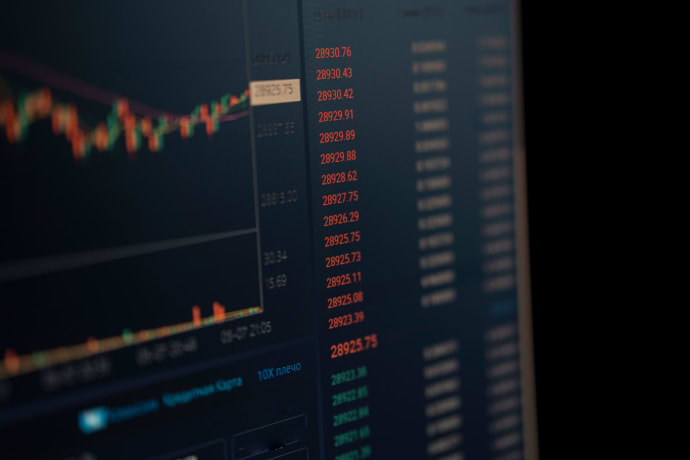
- The Nasdaq 100 has recorded a third correction of the year and is nearing daily support at 28,234.
- A break of that support could open the way toward the 200 day SMA at 27,940.
- The Dow was the outlier, staying in positive territory as investors rotated out of technology shares.
- Market participants remain divided on whether the pullback in equities is a buying opportunity or a warning sign.
- US Midterms are expected to dominate news flow, although many traders do not expect a major market reaction unless surprises emerge.
- Polling stations begin closing at 11 pm GMT and results are expected to roll into the early hours of Wednesday morning.
- The RBA decision is due at 3:30 am, with markets widely expecting a 25 bps increase from 4.60% to 4.85%.
- Current pricing implies 21 bps of tightening for the meeting, equal to an 87% chance of an increase.
- Reuters polling shows 30 of 32 analysts expect a hike, while 2 expect no change.
- Swiss CPI inflation is scheduled for 7:30 am GMT, while the September US JOLTS report is due at 3:00 pm.
US Equities Lose Momentum After Early Strength
US stocks struggled to build on early gains as the session developed, leaving investors with a familiar problem: a market that can attract initial dip buying but still lacks the conviction needed for a sustained rebound. The early bid across US indices appeared relatively healthy, yet follow through faded and the broader tone weakened as the day progressed. For FXCOINZ, the key takeaway is not simply that stocks slipped, but that the market remains highly selective, with leadership and risk appetite both under pressure.
The Nasdaq 100 remains the focal point because it has now recorded a third correction of the year. That matters for sentiment because technology and growth shares have played an outsized role in equity market direction. When the Nasdaq weakens, traders often read it as a signal that risk appetite is cooling, especially when high valuation sectors come under pressure at the same time as policy uncertainty and macro data risks remain in view.
Technical traders are watching daily support at 28,234. If the Nasdaq 100 absorbs bids there and stabilizes, it could help revive confidence among dip buyers. If that level gives way, the next major area in focus is the 200 day SMA at 27,940. The 200 day moving average is widely followed because it is often treated as a dividing line between a constructive longer term trend and a more cautious market backdrop. A move toward that area would likely intensify debate over whether this is a routine correction or a deeper shift in positioning.
Dow Holds Up as Investors Rotate Out of Technology
The Dow stood out by remaining in positive territory while technology shares lagged. That divergence points to rotation rather than a uniform risk off move. Investors appeared to move away from tech exposure and toward areas of the market perceived as more defensive or less sensitive to valuation pressure. Rotation can keep headline indices from falling in unison, but it can also signal that investors are becoming more selective as they reassess risk.
Market participants are still weighing whether the broader equity pullback offers a fresh dip buying signal. Some remain constructive on equities, but the presence of multiple headwinds has made conviction harder to sustain. When indices fail to hold early strength, it often reflects uncertainty beneath the surface. Buyers may be present, but they are not yet strong enough to force a decisive reversal.
For equity traders, the question is whether support levels can hold while macro event risk passes. If the Nasdaq 100 stabilizes around 28,234, sentiment could improve. If that level breaks and the index moves toward 27,940, the market may become more defensive, especially if technology weakness continues to drive the tone.
Midterms May Dominate Headlines Without Driving Markets
The US Midterms are set to dominate the news cycle, but many market participants are not expecting a major immediate reaction. Democrats are widely favoured to win the House and the Senate, which suggests that a large portion of the expected political outcome may already be reflected in market thinking. Still, elections can matter if the outcome differs from expectations, especially when traders are already sensitive to macro risk.
Polling stations begin closing at 11 pm GMT, with results expected to roll into the early hours of Wednesday morning. That timing means any surprise could be felt most clearly during the Asia Pac session. A result that broadly matches expectations may have limited market impact, while an unexpected political shift could create short term volatility across equities, currency markets and rates.
Political events often affect markets through policy expectations rather than through the vote itself. Traders may consider whether fiscal priorities, regulatory pressure or risk sentiment could shift after the results. However, without a clear surprise, the midterm vote may remain more of a headline driver than a sustained market catalyst.
RBA Rate Decision Takes Center Stage
The Reserve Bank of Australia decision is one of the most important scheduled events on the docket. The RBA is widely expected to raise its cash rate by 25 bps from 4.60% to 4.85%, which would mark its fifth rate hike this year. Because the move is already heavily expected, the rate decision alone may not be enough to generate a large market reaction if the central bank delivers the anticipated increase.
As of writing, markets imply 21 bps of tightening for the meeting, equal to an 87% chance of an increase. A Reuters poll shows 30 of 32 analysts expect a hike, while 2 expect no change. Those figures indicate that a standard 25 bps hike is close to the consensus view. In that setting, the surprise risk is more asymmetric. A hike may be treated as confirmation, while a hold could be seen as a meaningful dovish surprise.
If the RBA were to follow the RBNZ and hold steady, traders would likely expect a swift downside move in the Australian dollar and potential upside in the ASX 200. That response would reflect a reassessment of the policy path. A hold would suggest the central bank is more cautious about further tightening than markets currently assume, which could weigh on the currency while supporting equities through lower rate expectations.
Votes, Statement Language and Inflation Forecasts Matter
Assuming the RBA hikes, attention will quickly shift from the headline decision to the details. The vote split may be especially important. A unanimous decision would likely be read as hawkish because it would show broad agreement inside the central bank that additional tightening is needed. A 7 to 2 vote or a 6 to 3 vote would lean more dovish, suggesting a greater degree of internal caution.
The updated Statement on Monetary Policy will also be closely watched. Market participants will focus on cash rate assumptions and how they compare with current pricing. Markets are expecting the RBA to hold after today’s anticipated hike, so any signal that policymakers see a different path could move the Australian dollar, bond yields and local equity sentiment.
Inflation forecasts will be another key area of focus. If the central bank indicates that price pressures remain persistent, traders may interpret that as support for a higher for longer stance. If the forecasts suggest inflation is easing in a way that gives policymakers room to pause, the Australian dollar could struggle to gain traction even after a hike. Governor Michele Bullock’s press conference about an hour later will add another layer of interpretation, with traders likely to scrutinize her language for clues about the next policy step.
Swiss CPI and US JOLTS May Have Limited Impact
The Swiss CPI inflation report is due at 7:30 am GMT. Market attention may be limited because the expected jump in headline inflation is widely viewed as being driven largely by base effects. Policymakers at the Swiss National Bank have already noted base effects as an important driver, which reduces the likelihood that the data alone will change market expectations unless the surprise is significant.
Markets are assigning an 83% chance of a hold at the December meeting, with hikes priced further out on the curve. Because of that, it may take a large upside surprise to shift expectations materially. Some traders would want to see the year on year headline figure move beyond 1.4% before reconsidering the policy outlook in a meaningful way.
The September US JOLTS report is scheduled for 3:00 pm. This labor market indicator can provide insight into job openings and demand for workers, but the market response is often weaker and more lagging than it is for larger employment releases. December’s Fed meeting is not fully priced in, with a 65% probability attached, but traders may still be reluctant to make a major reassessment on JOLTS alone unless the data are far from expectations.
New Zealand Jobs Data Adds Another Policy Signal
New Zealand jobs data is also worth monitoring because of its relevance to RBNZ pricing. Labor market strength can influence central bank thinking by shaping the outlook for wages, inflation and domestic demand. If employment conditions remain firm, policymakers may have less room to sound relaxed about inflation risks. If the labor market softens, traders could see that as another reason for caution on further tightening.
For global markets, the broader theme is central bank divergence. The RBA, RBNZ, SNB and Fed are all operating in different domestic conditions, but each decision and data release feeds into a larger debate about how long restrictive policy needs to remain in place. That debate continues to affect equities, currencies and risk appetite.
FXCOINZ sees the current environment as one where technical levels and policy expectations are tightly connected. Equity traders are watching whether the Nasdaq 100 can defend support, while currency traders are watching whether the RBA validates or challenges current pricing. With event risk clustered across several regions, short term volatility could remain elevated even if no single release becomes a lasting market driver.
Frequently Asked Questions (FAQs)
Why did US stocks give back early gains?
US indices initially attracted a relatively healthy bid, but buying momentum faded as the session progressed. The weakness reflected a lack of follow through, particularly in technology shares, while investors remained cautious ahead of major policy and data events.
What level matters most for the Nasdaq 100?
Technical traders are watching daily support at 28,234. If that level breaks, the next key area in focus is the 200 day SMA at 27,940.
Why is the Dow performing differently from the Nasdaq?
The Dow remained in positive territory as investors rotated out of technology shares. That suggests the market is not selling all equity exposure equally, but is becoming more selective in how it takes risk.
Will the US Midterms move markets?
Many traders do not expect a major market reaction if results broadly match expectations. However, surprises could create volatility, especially as polling stations begin closing at 11 pm GMT and results continue into the early hours of Wednesday morning.
What is expected from the RBA decision?
The RBA is widely expected to raise its cash rate by 25 bps from 4.60% to 4.85%. Current market pricing implies 21 bps of tightening, equal to an 87% chance of an increase.
Why might the RBA decision still move markets if a hike is expected?
The decision could move markets through the vote split, statement language, cash rate assumptions, inflation forecasts and Governor Michele Bullock’s press conference. A surprise hold would likely be especially market moving.
How could the Australian dollar react to an RBA hold?
If the RBA holds steady instead of hiking, market participants would likely expect a swift downside move in the Australian dollar, while the ASX 200 could find support from lower rate expectations.
Why is Swiss CPI seen as a limited market catalyst?
The Swiss CPI release may have limited impact because the expected headline increase is largely viewed as a base effect. Markets are already assigning an 83% chance of a hold at the December SNB meeting.
Can the US JOLTS report change Fed expectations?
The September US JOLTS report may influence views on labor demand, but the market response to this indicator is generally weak and lagging. December’s Fed meeting is not fully priced in at a 65% probability, though JOLTS alone may not be enough to shift expectations significantly.