
What to Know
- Farmers in Paraná, Brazil, tokenized 10 dairy cows on the B3 stock exchange.
- The livestock-backed financing generated nearly $20,000 in credit for local agricultural producers.
- The project was led by Brazilian agtech firm Cowmed and is presented as a world-first dairy cow tokenization test in a live financing environment.
- AI-powered Smarty Collars monitor each cow’s health, behavior, and location in real time.
- The data is converted into an encrypted digital identity tied directly to the B3 credit agreement.
- The system is designed to stop the same cattle from being pledged across multiple loans.
- Cowmed already monitors about 100,000 dairy cows across more than 1,000 farms, with the herd valued at more than $395 million.
- Cowmed expects up to 20% of its network to adopt the tokenized financing model, potentially unlocking $77.6 million in fresh agricultural credit.
- McKinsey & Company forecasts the tokenized asset market could grow to about $4 trillion by 2030, while Standard Chartered has projected $30 trillion by 2034.
- As of March 2026, the total value of tokenized assets stood at $25 billion.
Brazilian Dairy Cows Become Onchain Collateral
Brazilian farmers facing tighter access to bank credit have turned to tokenized livestock as a new route to financing, with 10 dairy cows in Paraná placed on the B3 stock exchange as digital assets backed by real cattle. The financing raised nearly $20,000 in credit, showing how real-world asset tokenization can be applied beyond bonds, funds, real estate, or commodities and into everyday agricultural operations.
The project, led by Cowmed, converts cattle into digitally registered movable collateral. Each cow is represented by a unique encrypted digital identity linked to a credit agreement on B3. That structure gives lenders and market participants a clearer way to verify that a specific animal exists, is being monitored, and has not already been used as collateral elsewhere.
For small agricultural businesses, the timing is notable. Local producers have been dealing with stronger credit restrictions in agribusiness, and traditional bank lending limits can make it difficult to access working capital. By using dairy cows as a formalized, monitored asset, farmers gain another possible way to finance operations without relying entirely on conventional lending channels.
How Cowmed Turns Livestock Into Digital Assets
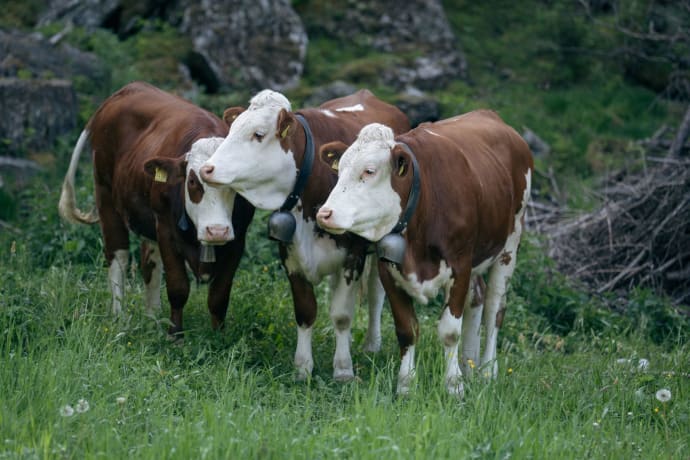
The core of the system is Cowmed’s AI-powered Smarty Collar, a device attached to the animal that continuously monitors health, behavior, and location. Rather than requiring repeated physical inspections on the farm, the collar produces real-time data that can be converted into an encrypted digital identity. That digital identity is then tied to the B3 credit agreement, giving the cow a traceable financial profile.
This matters because livestock is mobile, biological, and operationally complex. A cow can move between locations, fall ill, die, or be sold. In traditional lending, those characteristics make it harder to use cattle as reliable collateral without costly monitoring and trust-heavy documentation. By connecting physical animals to live digital records, the model attempts to reduce uncertainty for lenders while keeping the process practical for farmers.
The collar data helps establish that the animal backing the financing remains part of the herd and remains under observation. Market participants see this as a practical test of tokenization’s promise: taking an asset that already has economic value and making that value easier to verify, register, and finance.
Fraud Prevention Is Central to the Model
A major feature of the setup is its effort to prevent double-pledging. Double-pledging occurs when the same asset is used to support more than one loan, creating hidden risk for lenders and potential legal disputes if the borrower defaults. With cattle, the risk can be especially difficult to detect without strong identification and monitoring systems.
By assigning each cow a unique code and monitoring the animal in real time, Cowmed’s model seeks to make the collateral status of each cow clearer. The digital identity connects the physical animal to the financing contract, helping ensure that the same cow is not quietly pledged to another lender or credit arrangement.
The system also includes safeguards that allow a farmer to swap one dead cow for a live one. That feature recognizes the realities of agricultural production, where animals can be lost despite proper care. Instead of treating a biological event as an immediate breakdown of the collateral model, the structure allows the guarantee to be maintained through a replacement process.
Why B3 Registration Matters
Registration on B3 gives the tokenized cattle model a more formal market infrastructure. B3 is Brazil’s national stock exchange, and placing these livestock-backed tokens within that environment helps connect a rural asset class with regulated financial rails. For producers, it may create a more recognizable path to credit. For lenders, it can provide a clearer record of collateral tied to digital identification.
The key innovation is not simply that a cow has been represented digitally. The larger point is that the animal has been converted into a registered movable asset supported by continuous data. That combination of legal recognition, exchange infrastructure, and real-time monitoring is what allows the cow to function as a more transparent financing tool.
Technical traders and digital asset market watchers often discuss tokenization in the context of high-value financial products. This case is different because it centers on agricultural credit, a sector where capital needs are frequent and collateral can be hard to standardize. The Paraná project suggests that tokenization may be useful where assets are valuable but historically difficult to package for financing.
Cowmed’s Existing Network Could Expand the Model
Cowmed already tracks about 100,000 dairy cows across more than 1,000 farms. The monitored herd is worth more than $395 million, giving the company a substantial base from which to expand tokenized financing if the model proves workable. The firm expects up to 20% of its network to adopt the tokenized financing structure, a level that could unlock $77.6 million in fresh credit for the agricultural sector.
That expectation remains a projection rather than a completed outcome. Adoption will depend on farmer demand, lender confidence, operational reliability, and the ability of the system to handle real-world events such as animal replacement, farm transfers, and changing credit conditions. Still, the pilot shows how an existing agricultural data network can become the foundation for financial infrastructure.
For farmers, the appeal is straightforward. A dairy cow is already an income-producing asset, but it may not always be easy to turn that value into affordable credit. Tokenization attempts to narrow the gap between ownership and liquidity by making the animal easier to identify, verify, and pledge.
Real-World Asset Tokenization Moves Beyond Finance
The Brazilian cow tokenization project fits into the broader growth of real-world asset tokenization, often called RWA tokenization. The concept involves representing tangible or traditional financial assets onchain so they can be tracked, transferred, financed, or settled with more transparency and automation. While many RWA discussions focus on debt instruments, money market products, or real estate, agricultural assets show how wide the category could become.
McKinsey & Company forecasts the market for tokenized assets could grow to about $4 trillion by 2030. Standard Chartered has projected $30 trillion by 2034. Those projections point to strong institutional interest, although the market remains much smaller today. As of March 2026, the total value of tokenized assets stood at $25 billion.
The gap between current market size and long-term projections highlights both opportunity and uncertainty. Tokenization advocates argue that the technology can reduce friction, improve collateral transparency, and broaden access to capital. Skeptics often focus on legal enforceability, data quality, custody, and the need to ensure that digital records accurately reflect real-world assets. In livestock finance, those questions are especially important because the asset is living, movable, and subject to health risks.
A Practical Test for Onchain Credit
The Paraná transaction is small in absolute size, but it carries symbolic weight because it tests tokenization in a practical, operationally demanding setting. Nearly $20,000 in credit backed by 10 cows is not a large capital market event, but it demonstrates a specific use case: a farmer needs financing, a lender needs confidence, and a real asset needs to be verified without excessive manual inspection.
If the model scales, it could help agricultural producers unlock credit from assets they already own. It could also provide lenders with a more data-rich view of collateral quality. That does not remove all credit risk, but it may improve visibility into the asset backing the loan.
For the digital asset industry, the project is another sign that blockchain infrastructure is increasingly being tested in markets far outside speculative trading. Tokenized cows may sound unusual, but the underlying problem is conventional: how to make collateral more trustworthy, liquid, and usable. FXCOINZ will continue watching how real-world asset models evolve as more industries experiment with tokenized financing.
Frequently Asked Questions (FAQs)
What happened in Paraná, Brazil?
Farmers in Paraná tokenized 10 dairy cows on the B3 stock exchange and used the livestock-backed digital assets to raise nearly $20,000 in credit.
Who led the dairy cow tokenization project?
The project was led by Cowmed, a Brazilian agtech firm that already monitors about 100,000 dairy cows across more than 1,000 farms.
How are the cows monitored?
Each cow is equipped with an AI-powered Smarty Collar that continuously tracks health, behavior, and location, creating data that supports an encrypted digital identity.
Why tokenize livestock?
Tokenizing livestock can help turn a real and tangible farm asset into formal collateral, giving producers another way to access credit during periods of tighter bank lending.
How does the system reduce fraud risk?
The digital identity tied to each cow helps prevent double-pledging, which is when the same animal is used as collateral for multiple loans.
What happens if a cow dies?
The system includes safeguards that allow a farmer to swap one dead cow for a live one, helping preserve the collateral structure tied to the financing arrangement.
How large is Cowmed’s monitored herd?
Cowmed monitors about 100,000 dairy cows across more than 1,000 farms, with the herd valued at more than $395 million.
How much credit could this model unlock?
Cowmed expects up to 20% of its network to adopt the tokenized financing model, potentially unlocking $77.6 million in fresh credit for the agricultural sector.
How does this fit into real-world asset tokenization?
The project shows how tokenization can move beyond traditional financial products and apply to physical assets such as livestock, using digital identity and monitoring to support financing.