
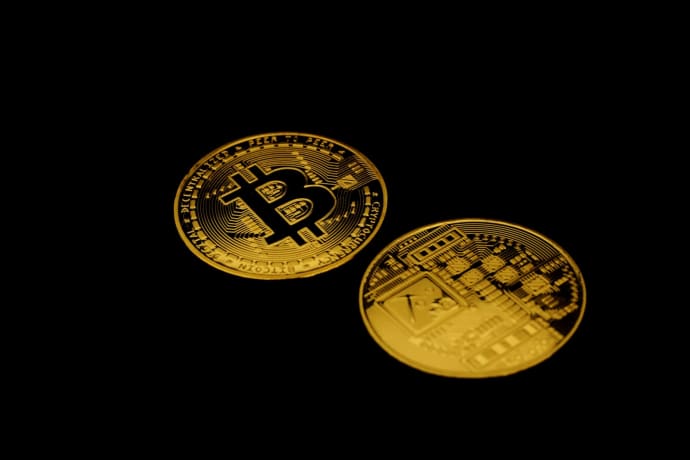
What to Know
- Six Bitcoin wallets last active between 2011 and 2014 moved a combined 553.59 BTC, worth about $40 million, from Aug. 16 through Aug. 26.
- One of the wallets had not moved any Bitcoin in more than 15 years.
- Five of the six wallets sent coins to addresses with no known exchange links.
- One wallet transferred 40 BTC to Boerse Stuttgart Digital, a German crypto custody and trading provider.
- Dormant Bitcoin activity fell in the second quarter to its lowest level since the third quarter of 2022.
- Old Bitcoin moved in 2024 and 2025 at levels rivaled only by the 2017 bull market, but 2026 is on pace for less than half of last year’s total.
- Wallet movement does not automatically mean selling because onchain data usually cannot prove whether an owner sold, changed wallets, moved to custody, or reorganized holdings.
- Two of the six wallets carry labels connecting them to a New York lawsuit involving 39,069 dormant addresses and claims under lost-property laws.
- A Coldcard hardware wallet flaw disclosed in late July coincided with roughly 210,000 BTC leaving wallets classified as long-term holder wallets in a single week.
- Quantum risk remains part of the broader discussion around old Bitcoin wallets, though some major holders have not cited it as a reason for selling.
Old Bitcoin Wallets Wake Up Again
Bitcoin wallets that had remained untouched for more than a decade have moved 553.59 BTC, worth about $40 million, in a fresh round of onchain activity that drew attention across the crypto market. The six wallets involved were last active between 2011 and 2014, a period when Bitcoin was still in an early phase of adoption and traded at only a fraction of its later market value.
The transfers occurred from Aug. 16 through Aug. 26 and involved coins that had sat motionless through multiple market cycles, exchange collapses, regulatory shifts, and institutional adoption waves. One of the six wallets had not moved a coin in more than 15 years, making its reactivation especially notable for traders who monitor long-dormant supply.
Movements from early Bitcoin wallets often create immediate market speculation. Some traders interpret old-coin movement as a potential sign that early holders may be preparing to realize gains. Others view such transfers more cautiously, noting that a blockchain transaction only confirms that coins moved from one address to another. It does not, by itself, prove that coins were sold.
Most Coins Did Not Head to Known Exchanges
The most important detail in the latest movement is where the coins went. Five of the six decade-old wallets sent Bitcoin to addresses without known exchange links. That matters because coins moving directly to major trading venues can sometimes be interpreted as a potential prelude to selling, while coins moving to unlabeled addresses may reflect custody changes, security upgrades, estate planning, wallet consolidation, or a simple reshuffling of holdings.
The sixth wallet moved 40 BTC to Boerse Stuttgart Digital, a German crypto custody and trading provider. That transfer was the clearest connection to an identifiable custody and trading entity among the six wallets. Even then, the move does not confirm a sale. Custody providers can be used for storage, institutional management, compliance reasons, or future optionality, not only for liquidation.
For Bitcoin market participants, the distinction is crucial. Old wallets attract attention because they tend to represent holders who acquired coins very early and sat through enormous appreciation. However, selling pressure is not the same thing as wallet activity. A transfer to a new address may be defensive rather than bearish, especially when the receiving address has no known exchange association.
Dormant Coin Activity Has Slowed
The latest $40 million movement arrives against a broader backdrop of declining dormant Bitcoin activity. Dormant Bitcoin activity fell in the second quarter to its lowest level since the third quarter of 2022. In this context, a dormant coin is counted as one that has remained at the same address for at least a year.
That slowdown follows two unusually active years for old Bitcoin supply. Dormant coins moved in 2024 and 2025 at levels rivaled only by the 2017 bull market, when early holders sitting on large gains began spending or moving coins at elevated rates. Market observers have described that heavy movement as a major distribution phase, but the current pace appears much more subdued.
Based on current tracking, 2026 is on pace to see less than half as much dormant Bitcoin move as last year. That does not eliminate the possibility of further large wallet movements, but it suggests that the latest transfers are occurring during a quieter period for old-coin activity rather than during a broad acceleration in early-holder movement.
This distinction may help explain why the market reaction to dormant-wallet activity has become more nuanced. In earlier cycles, old coins moving could trigger fears of imminent selling. Today, with more custody options, more security concerns, and more sophisticated holders, the market has more possible explanations to consider before treating each old-wallet transfer as bearish.
Why Old Bitcoin Transfers Do Not Always Mean Sales
Bitcoin’s public blockchain is transparent, but it is not always self-explanatory. Anyone can see that coins have moved from one address to another, yet the chain generally does not reveal the owner’s reason for moving them. It also does not always identify whether the new address belongs to the same holder, a custodian, a trading venue, or another private wallet.
There are several reasons a long-dormant holder might move coins without intending to sell. A holder may rotate funds into a newer wallet format, split holdings across multiple addresses, transfer coins to a regulated custodian, update security practices, respond to legal or estate requirements, or test whether old keys remain accessible. Some transfers may reflect tax planning or institutional onboarding, while others may simply represent internal housekeeping.
This uncertainty is why technical traders often pay close attention to destination addresses. A move to a known exchange can carry a different signal from a move to an untagged address. In the latest cluster, most of the movement avoided known exchange links, which weakens the argument that the transfers were automatically tied to immediate market selling.
Still, old Bitcoin movements remain psychologically important. Long-term holders are often viewed as some of the market’s strongest hands. When wallets from early years become active, they remind traders that early supply still exists and can re-enter circulation, even if the precise intent is unclear.
Legal Notices and Dormant Address Claims Add Another Layer
Two of the six wallets carry labels connecting them to a New York lawsuit involving a pseudonymous plaintiff known as Noah Doe. The case seeks control of Bitcoin held across 39,069 dormant addresses under the state’s lost-property laws. That legal strategy has added a new dimension to the debate over old Bitcoin addresses and ownership rights.
As part of the effort, tiny amounts of Bitcoin were sent to targeted addresses along with onchain legal notices. The argument is that coins could potentially be treated as abandoned if nobody establishes ownership. The theory is controversial because Bitcoin ownership depends on control of private keys, and dormant addresses may simply belong to holders who choose not to transact.
In June, one address named in the case moved 35.55 BTC after remaining untouched since March 2011. That movement stood out as one of the first visible responses from a wallet targeted in the lawsuit. The latest labels linked to two of the six recently active wallets suggest that legal pressure may be part of the broader environment prompting some dormant holders to prove control or move funds.
Even so, it remains difficult to assign a single explanation to these transactions. Some old wallets may be moving because owners are responding to legal notices. Others may be reacting to security concerns, custody preferences, or personal circumstances. The common thread is that previously inactive supply is becoming visible again, even as the overall pace of dormant activity has declined.
Security Concerns Remain in Focus
Security is another important factor in the movement of older Bitcoin. After a flaw in certain Coldcard hardware wallets was disclosed in late July, roughly 210,000 BTC left wallets classified by Glassnode as belonging to long-term holders in a single week. The vulnerability made poorly generated wallet keys easier for attackers to guess, prompting some users to move Bitcoin into newly created wallets or regulated custody even when their own coins were not directly exposed.
That episode showed how quickly security news can appear onchain. When a wallet flaw becomes public, holders may act preemptively, especially if their coins have been stored for years and represent a substantial portion of personal or institutional wealth. The movement of coins in response to risk does not necessarily indicate a loss of confidence in Bitcoin itself. It may instead reflect a desire to maintain control under improved security assumptions.
Older wallets can be especially sensitive to security debates because standards, tools, and user practices have evolved significantly since Bitcoin’s early years. Holders who created wallets long ago may decide that modern custody, updated signing practices, or new wallet setups better match today’s threat environment. That can bring dormant coins back onto the blockchain without implying that holders are exiting the market.
Quantum Risk Is Part of the Debate, But Not the Only Explanation
Quantum computing risk has also become part of the conversation around very old Bitcoin wallets. Bitcoin wallets whose public keys have already been exposed are among those that could eventually be vulnerable if quantum computers become powerful enough to break the mathematics protecting today’s digital signatures. Roughly 6.9 million BTC could fall into that category under such a scenario.
That possibility has made quantum risk a tempting explanation whenever old Bitcoin moves. However, the current market evidence does not suggest that quantum concerns are the dominant driver behind whale behavior. Some large-holder discussions have pushed back on the idea that major owners are selling because of quantum risk, while noting that some institutional investors have cited quantum concerns as a reason not to buy Bitcoin.
For now, quantum risk remains a longer-term strategic issue rather than a proven explanation for the latest decade-old wallet movements. The more immediate factors include custody decisions, security upgrades, legal notices, and general wallet management. Market participants are likely to keep monitoring old-wallet activity closely, but the latest transactions show why interpretation requires caution.
Market Takeaway for Bitcoin Traders
The latest dormant-wallet activity is significant because of the age of the coins and the dollar value involved, but it is not a straightforward bearish signal. Six wallets moved 553.59 BTC worth about $40 million, yet five sent funds to addresses with no known exchange links. Only one transferred 40 BTC to an identifiable German custody and trading provider.
At the same time, the broader trend shows dormant Bitcoin activity has cooled. After heavy old-coin movement in 2024 and 2025, 2026 is on pace for less than half of last year’s total. That makes the recent activity important but not necessarily part of a large-scale wave of early-holder distribution.
For FXCOINZ readers, the key point is that old Bitcoin movement should be tracked carefully but interpreted conservatively. Onchain transfers provide valuable clues, not complete answers. Until coins move to known exchange venues or selling is otherwise confirmed, the more balanced conclusion is that dormant holders are becoming active for a range of possible reasons, not that they are all rushing to cash out.
Frequently Asked Questions (FAQs)
How much Bitcoin did the dormant wallets move?
Six Bitcoin wallets moved a combined 553.59 BTC, worth about $40 million, from Aug. 16 through Aug. 26.
How old were the wallets that moved Bitcoin?
The wallets were last active between 2011 and 2014. One of them had not moved any Bitcoin in more than 15 years.
Did the dormant Bitcoin move to exchanges?
Most of it did not. Five of the six wallets sent coins to addresses with no known exchange links, while one moved 40 BTC to Boerse Stuttgart Digital.
Does old Bitcoin moving mean the owner is selling?
No. A Bitcoin transaction shows movement between addresses, but it usually cannot prove whether the owner sold, changed wallets, moved to custody, or reorganized holdings.
Why do traders watch dormant Bitcoin wallets?
Traders watch dormant wallets because they can represent early holders with large unrealized gains. When those coins move, the market often looks for signs of possible selling pressure or security-related repositioning.
Is dormant Bitcoin activity increasing?
Recent broader data shows the opposite. Dormant Bitcoin activity fell in the second quarter to its lowest level since the third quarter of 2022, and 2026 is on pace for less than half of last year’s total.
What role does the New York lawsuit play?
Two of the six wallets carry labels connecting them to a New York lawsuit involving 39,069 dormant addresses. The case argues that certain coins could be treated as abandoned if ownership is not established.
Could security concerns explain some old wallet movements?
Yes. After a flaw in certain Coldcard hardware wallets was disclosed in late July, roughly 210,000 BTC left wallets classified as long-term holder wallets in a single week, showing how security concerns can trigger onchain movement.
Is quantum computing causing old Bitcoin wallets to move?
Quantum risk is part of the long-term discussion because roughly 6.9 million BTC could be vulnerable under a powerful enough quantum scenario, but it has not been established as the reason for the latest wallet movements.