
What to Know
- A temporary U.S.-Iran agreement intended to ease tensions and reopen the Strait of Hormuz expired this week without new talks beginning.
- Only seven commodity ships crossed the strait on Thursday, half the number recorded the previous day and far below normal traffic conditions.
- Before the fighting began earlier this year, about one-fifth of global oil and gas supplies moved through the Strait of Hormuz.
- Major Gulf producers remain constrained by restricted passage, while Iran’s exports were already pressured by a U.S. naval blockade.
- Additional barrels are moving through pipelines and routes outside the Persian Gulf, but those flows are not closing the supply gap.
- President Trump said Friday that the United States would begin an economic operation against Iran to pressure Tehran over its nuclear program, while Iran issued its own warning.
- Gasoline and diesel futures finished higher Friday, with September gasoline gaining more than $0.08 per gallon.
- The spread between diesel futures and crude oil rose above $100 a barrel for the first time, reinforcing the product-led bid for crude.
Oil Market Holds Firm After U.S.-Iran Deal Expires
Crude oil buyers continue to hold the stronger hand as the temporary U.S.-Iran agreement that had offered a path toward reduced tensions expired this week without fresh negotiations. For traders, the lapse matters because it removed the clearest near-term catalyst for a rapid unwinding of the geopolitical risk premium that has been embedded in oil prices. Without a renewed diplomatic track, the market remains focused on constrained shipping, limited Gulf supply flexibility, and the possibility that tensions could keep a key energy corridor operating well below normal capacity.
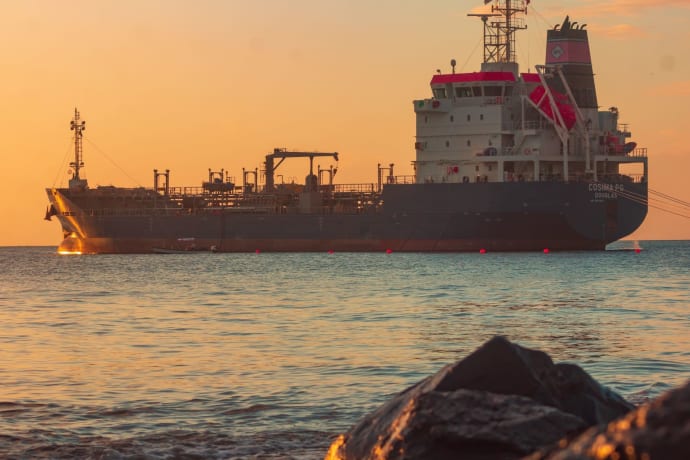
The Strait of Hormuz remains the central pressure point. On Thursday, only seven commodity ships crossed the waterway, a sharp slowdown from the previous day and well below the traffic patterns that energy markets would associate with calmer conditions. Ship-tracking data has shown that traffic has been running at very low levels for weeks, underscoring that the disruption is not simply a one-day anomaly. Before the fighting began earlier this year, about one-fifth of global oil and gas supplies moved through the strait, making the waterway one of the most important chokepoints in the global energy system.
That level of strategic importance explains why crude sellers have struggled to break the bid even when headlines temporarily suggest possible de-escalation. Market participants are not treating vague talk of ending conflict as the same thing as a reopened shipping lane, restored confidence, or normalized Gulf flows. In a market where supply security is being questioned, traders tend to demand tangible evidence before removing a risk premium. At this stage, the visible evidence still points to restricted passage and constrained movement of barrels.
Hormuz Traffic Keeps the Supply Premium Alive
The sharp reduction in ship crossings has created a persistent source of support for crude. The major Gulf producers remain limited by restricted passage, while Iran’s own exports were already under pressure from a U.S. naval blockade. Additional oil is moving through pipelines and routes outside the Persian Gulf, but those barrels have not been enough to fill the gap left by lower traffic through the strait. That matters because rerouting can soften the blow of a disruption, but it rarely replicates the speed, scale, or logistical efficiency of the normal seaborne network.
For physical market participants, the issue is not only the volume of crude that can be moved, but also the reliability of schedules, insurance considerations, and the broader willingness of commercial operators to commit vessels to a tense corridor. When traffic remains low for weeks, refiners, shippers, and traders have to plan around uncertainty. That uncertainty can encourage earlier buying, wider precautionary margins, and a reluctance among sellers to press prices lower aggressively.
Technical traders are also watching the market’s reaction to geopolitical headlines. Late selling emerged on reports that Iran had discussed ending the fighting from a position of strength, but crude quickly recovered. That reaction suggested that headline-driven bearish pressure lacks durability unless it is backed by measurable progress. In practical terms, a conversation about ending a fight is not the same as a ceasefire, a renewed agreement, or a return to normal shipping patterns. The market appears to be treating diplomacy as a potential future catalyst, not a present solution.
Political Signals Offer Little Relief for Bears
The latest political exchange has not delivered the kind of clarity sellers need. President Trump said Friday that the United States would begin an economic operation against Iran to force Tehran to abandon its nuclear program. Iran responded with its own warning. For crude traders, that exchange does not resemble the early stages of a clean diplomatic breakthrough. Instead, it reinforces the perception that tensions remain elevated and that the shipping risk around Hormuz may persist.
Oil bears are effectively waiting for diplomacy to do the heavy lifting. Their case depends on the idea that talks resume, restrictions ease, shipping traffic normalizes, and the risk premium fades. The challenge is that none of those steps has materialized. The expired agreement did not roll into a new negotiating process, and neither side moved to begin new talks. Until that changes, selling into a supply-risk market remains difficult, especially when physical indicators still point to tightness around the Gulf.
Some chart watchers may frame the current market as one where bearish headlines are being absorbed rather than extended. That does not mean crude can only move higher, but it does show that sellers need more than speculation about de-escalation. They need proof that barrels can move more freely and that buyers no longer have to price in disruption risk. In the absence of that proof, crude remains underpinned by the same factors that have supported it for weeks.
Refined Products Add a Second Layer of Support
The crude market is not being supported by supply risk alone. Refined products are adding another layer of demand-side strength. Gasoline and diesel futures finished higher Friday, with September gasoline gaining more than $0.08 per gallon and diesel posting smaller but steady gains. Product strength matters because it can encourage refiners to keep pulling crude through their systems when margins are attractive. In that environment, the bid for crude comes not only from geopolitical hedging, but also from the economics of turning oil into higher-value fuels.
The diesel side of the market is particularly important. The gap between diesel futures and crude oil rose above $100 a barrel for the first time, a notable signal that refiners are enjoying strong incentives. When refined product margins expand, refiners can compete more aggressively for feedstock because the economics of processing crude remain favorable. That can create a wider base under crude prices, especially when supply uncertainty is already limiting the willingness of sellers to lean heavily against the market.
This combination of restricted Gulf flows and stronger refined product pricing gives crude a more durable support structure. If the market were relying only on geopolitical fear, a credible diplomatic breakthrough could quickly pressure prices. But when product cracks are also strong, the demand for crude from refiners can keep the market better supported even during brief waves of headline-driven selling. That is why the product complex is important in the current setup: it is not merely following crude higher, it is helping bid for barrels.
Why Sellers Still Struggle to Break Momentum
Sellers face a difficult setup because the bearish path requires several uncertain developments to happen in sequence. First, diplomacy would need to resume. Then the shipping lane would need to reopen more fully. After that, traffic would need to recover enough to convince the market that the disruption risk has faded. Finally, alternative routes and Gulf supply channels would need to demonstrate that they can normalize flows. Without those steps, crude shorts remain exposed to sudden supply headlines and product-led buying.
Buyers, by contrast, can point to existing conditions. The agreement has expired. New talks have not begun. Hormuz traffic remains low. Major Gulf producers are constrained. Iran’s exports are under pressure. Extra barrels outside the Persian Gulf are not filling the gap. Gasoline and diesel futures are stronger. Refining margins are favorable. Together, those facts explain why crude continues to attract buying interest even after bouts of late selling.
Market participants will likely continue to monitor ship crossings through the Strait of Hormuz as a real-time gauge of risk. A sustained rebound in traffic would be one of the clearest signs that the supply premium could ease. Conversely, continued low crossings would reinforce the view that the market must keep paying for uncertainty. For now, the balance of evidence remains supportive for crude, and sellers have yet to show they can overcome the combined force of geopolitical risk and product demand.
What Comes Next for Crude Traders
The next phase of the trade depends on whether diplomacy produces tangible results or remains stalled. If talks restart and shipping traffic improves, bearish traders may gain a stronger argument that the risk premium is vulnerable. If the political standoff continues and traffic stays depressed, buyers may remain in control. The important point is that the market is not reacting to rhetoric alone; it is weighing words against flows, margins, and the practical ability of barrels to move from producers to refiners.
For now, crude oil remains a market where the supply side is driving sentiment, while refined products are reinforcing the bid. That combination keeps the burden of proof on sellers. Until there is clear evidence of normalized Hormuz movement or a meaningful diplomatic reset, the path of least resistance may continue to favor buyers during pullbacks, with bears forced to wait for developments that have not yet arrived.
Frequently Asked Questions (FAQs)
Why is the Strait of Hormuz important for oil markets?
The Strait of Hormuz is a key energy shipping corridor. Before the fighting began earlier this year, about one-fifth of global oil and gas supplies moved through the waterway, so restricted passage can create a meaningful supply risk premium in crude markets.
What happened to the temporary U.S.-Iran agreement?
The temporary agreement expired this week, and neither side moved to begin new talks. That left oil traders without the clearest near-term development that could have reduced the market’s geopolitical risk premium.
How low was Hormuz traffic on Thursday?
Only seven commodity ships crossed the Strait of Hormuz on Thursday. That was half the number recorded the previous day and far below normal traffic conditions.
Are alternative routes making up for the disruption?
Extra oil is moving through pipelines and routes outside the Persian Gulf, but those barrels are not filling the gap created by restricted passage through the Strait of Hormuz.
Why did crude recover after late selling?
Late selling followed headlines about Iran discussing an end to the fighting from a position of strength, but the market recovered because traders appeared to require concrete signs of de-escalation rather than discussion alone.
How are gasoline and diesel affecting crude prices?
Gasoline and diesel futures finished higher Friday, with September gasoline gaining more than $0.08 per gallon. Strong refined product pricing can encourage refiners to keep bidding for crude barrels.
What does the diesel-crude spread signal?
The gap between diesel futures and crude oil rose above $100 a barrel for the first time. That points to strong refining economics, which can support demand for crude feedstock.
What would weaken the bullish crude setup?
A sustained return of shipping traffic through the Strait of Hormuz, renewed diplomacy, or clear signs that Gulf supply constraints are easing could weaken the risk premium supporting crude.
Who currently has the advantage in the oil market?
Buyers currently appear to have the advantage because supply risks remain unresolved and refined product strength is adding another source of support for crude demand.