
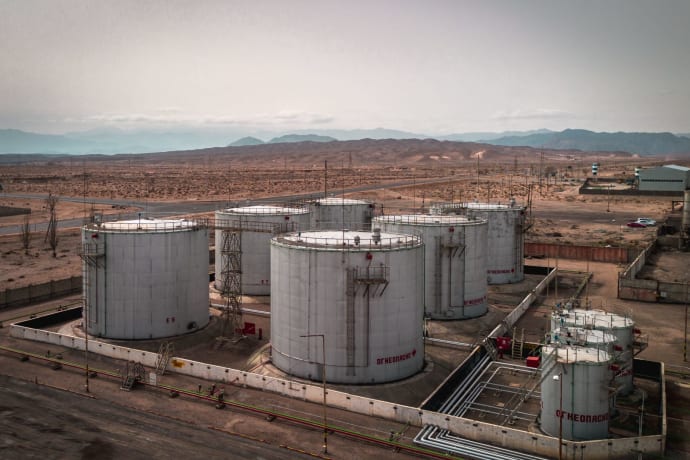
What to Know
- Hard asset owners saw net worth surge by $12.8 trillion in Q2 2026, reaching a record $195.9 trillion.
- Scarcity pressures are broadening across energy, metals and agriculture as one shortage can feed into another.
- Diesel and gasoil represent almost 30% of global oil demand, making fuel stress a major transmission channel for the physical economy.
- Refinery margins have reached record levels in the Atlantic Basin as supply disruptions intensify.
- Agriculture is gaining attention because crops cannot respond instantly to price signals, interest-rate changes or capital flows.
- Soybeans have traded near the 12.815 level while chart watchers monitor the sector’s upward momentum in 2026.
- UBS has been telling clients to position for a commodity upcycle through diversified exposure across precious metals, energy, industrial metals and agriculture.
- Some market participants view 2026 as the opening phase of a longer hard asset cycle rather than a single-year move.
Scarcity Becomes a Market Theme
The global economy is being forced to rediscover the financial meaning of scarcity. For years, many markets were priced around the assumption that supply chains could stretch, capital could solve bottlenecks, and physical resources would arrive when needed. That assumption is now being tested across hard assets, where constrained supply, geopolitical friction, energy stress and rising demand are making ownership more important than simple consumption.
The central lesson for investors is direct: when assets rise, owners participate. When the same assets become more expensive for consumers, businesses and governments, those without exposure may simply absorb higher costs. In Q2 2026 alone, strategically positioned hard asset owners saw their net worth surge by $12.8 trillion, reaching a record $195.9 trillion. That scale highlights why the scarcity trade has become more than a tactical market idea.
For commodities, the implication is especially powerful. If energy, metals and agriculture continue commanding higher prices, the difference between paying for resources and owning exposure to resources may become one of the defining financial divides of this cycle. Market participants are increasingly treating hard assets not only as inflation-sensitive holdings, but as claims on the essential inputs that keep the physical economy running.
Ownership Changes the Equation
In a resource-constrained economy, ownership can alter the risk profile of a portfolio. Consumers of energy, metals and agricultural goods face rising input costs when markets tighten. Owners of resource-linked assets may instead benefit from the same pressure, depending on market structure, timing and execution. That is why some investors are shifting attention from short-term price reactions toward longer-term exposure across the hard asset complex.
The scarcity trade is not limited to a single commodity. Gold has reflected monetary concerns. Industrial metals have reflected infrastructure and electrification pressures. Energy has exposed the vulnerability of supply systems. Agriculture is now drawing more attention because food production sits at the intersection of weather, biology, fuel, fertilizer, machinery and transport.
This interconnected structure matters because hard assets consume other hard assets. Copper requires energy to extract, process and transport. Aluminium requires enormous quantities of electricity. Food production depends on diesel, natural gas, fertilizer, equipment and freight networks. A shortage in one market can quickly become a cost shock in another, turning isolated stress into a broader commodity cycle.
Diesel Stress Shows How Shortages Spread
The current diesel squeeze offers a clear example of how physical constraints can migrate through the economy. Diesel and gasoil represent almost 30% of global oil demand, making them critical to transportation, agriculture, mining, construction and industrial logistics. When diesel becomes more expensive or harder to secure, the effects do not remain confined to fuel markets.
Diesel powers trucks, tractors, mining fleets, harvesters, construction equipment and freight networks. It is embedded in the cost of moving raw materials, harvesting crops, transporting goods and maintaining industrial activity. As supply disruptions intensify, refinery margins have reached record levels in the Atlantic Basin, underscoring the importance of refined products within the broader energy complex.
For commodity traders, this matters because diesel stress can raise production and transportation costs across multiple sectors. Higher fuel costs can affect metals mining, food production and freight-intensive supply chains. In turn, those pressures may influence consumer prices and corporate margins. This is how a commodity cycle can broaden from one visible shortage into a wider repricing of essential resources.
Agriculture Moves Into Focus
Agriculture may be the next major rotation for hard asset investors because it has a constraint financial markets cannot remove: biology has a speed limit. Capital can move rapidly, and portfolios can be repositioned quickly, but wheat, corn and soybeans cannot grow instantly because prices rise. A missed planting window cannot be repaired with an interest-rate cut, and drought cannot be reversed with liquidity.
That makes agricultural markets structurally different from financial assets. Supply responses require seasons, weather cooperation, input availability and functioning logistics. Meanwhile, higher diesel, natural gas, fertilizer and transportation costs can change the economics of food production before the full impact is visible to consumers. This lag is one reason market participants often watch agriculture closely when energy and fertilizer pressures are rising.
Wheat, corn, soybeans, sugar, coffee and fertilizers are therefore attracting increasing attention. Soybeans have been watched closely by technical traders in 2026, with prices trading near the 12.815 level. The move has reinforced the idea that agriculture may not be isolated from the broader hard asset upcycle, particularly if input costs and supply risks remain elevated.
Why Supply Cannot Match Capital Speed
One of the strongest arguments behind the commodity upcycle is the mismatch between fast-moving capital and slow-moving supply. Money can rotate across sectors quickly. A fund can increase commodity exposure, reduce it, or shift from one segment to another within a short period. Physical supply does not work that way.
A copper mine can take years to develop. A refinery cannot simply appear next month. Another harvest requires another season. Energy infrastructure, mining capacity, agricultural output and transportation systems all operate on physical timelines. When capital moves into assets tied to these resources faster than supply can expand, price becomes the immediate adjustment mechanism.
This dynamic helps explain why diversified exposure across precious metals, energy, industrial metals and agriculture has become a common institutional theme. UBS has explicitly told clients to position for a commodity upcycle, pointing to forces such as government debt, geopolitical risk, AI-driven electricity demand, electrification and constrained supply. Those drivers may not affect every commodity in the same way, but they support the broader view that physical resources are regaining strategic importance.
From Hard Asset Year to Hard Asset Decade
Some chart watchers and commodity strategists have framed 2026 as the year hard assets moved decisively into focus. The longer-term question is whether this is merely a strong year for resources or the beginning of a more durable repricing. The phrase hard asset decade captures the possibility that scarcity, underinvestment, geopolitical tension and physical demand could support resource markets well beyond a single calendar year.
That thesis remains conditional. Commodity markets are cyclical, volatile and sensitive to demand swings, policy shifts and supply surprises. A growth slowdown can weaken consumption. Improved supply conditions can ease pressure. Investor positioning can reverse sharply. Still, the present cycle is notable because the stresses are not concentrated in one area. Monetary pressure, infrastructure demand, energy vulnerability and agricultural constraints are appearing together.
For investors, the key issue is not simply identifying the hard asset that has already moved the most. It is identifying where the next imbalance may develop and where capital may rotate before the wider market recognizes the shift. Scarcity rarely announces itself in a single clean signal. It tends to emerge through tightening inventories, rising margins, higher input costs, delayed supply responses and increasingly urgent capital flows.
What Traders Are Watching Now
Technical traders are monitoring leadership changes within the commodity complex. If energy pressures continue to feed production costs, agricultural markets may receive greater attention. If industrial demand linked to electrification and infrastructure remains resilient, metals could stay in focus. If monetary uncertainty persists, precious metals may continue to serve as a key reference point for hard asset demand.
The broader message is that commodity markets are interconnected. A fuel shortage can affect food prices. Energy costs can reshape mining economics. Fertilizer stress can influence crop output expectations. Freight and transportation costs can alter regional supply balances. These feedback loops are why hard asset analysis increasingly requires a whole-complex view rather than a single-market lens.
The world spent decades pricing abundance. The next phase may force markets to price scarcity more aggressively. For traders and investors, recognizing scarcity is only the first step. The harder task is deciding which assets may benefit, which costs may rise, and where the next rotation could appear before consensus forms.
Frequently Asked Questions (FAQs)
What is the scarcity trade?
The scarcity trade refers to market positioning around assets that may benefit when essential resources become harder to obtain or more expensive. It often includes commodities such as energy, metals and agricultural products.
Why are hard asset owners in focus?
Hard asset owners are in focus because ownership can provide exposure to rising resource prices. In Q2 2026, strategically positioned hard asset owners saw net worth rise by $12.8 trillion to a record $195.9 trillion.
Why can one commodity shortage affect another market?
Many commodities require other commodities to produce, process or transport. For example, metals production requires energy, while agriculture depends on diesel, natural gas, fertilizer, machinery and freight networks.
Why is diesel important to the commodity cycle?
Diesel powers trucks, tractors, mining fleets, harvesters, construction equipment and freight systems. Since diesel and gasoil represent almost 30% of global oil demand, stress in that market can transmit costs across the physical economy.
Why is agriculture attracting more attention?
Agriculture is attracting attention because crop supply cannot respond instantly to higher prices. Planting windows, weather, fertilizer, fuel and transportation costs all affect output, making the sector sensitive to broader hard asset pressures.
Which agricultural markets are being watched?
Market participants are watching wheat, corn, soybeans, sugar, coffee and fertilizers. Soybeans have drawn attention in 2026, with prices trading near the 12.815 level.
What does a commodity upcycle mean?
A commodity upcycle is a period when prices across multiple resource markets trend higher because demand strengthens, supply remains constrained, or investors seek exposure to physical assets. Such cycles can be volatile and uneven.
Is the hard asset decade guaranteed?
No. The hard asset decade is a market thesis, not a certainty. It depends on whether scarcity pressures, supply constraints, geopolitical risks and demand drivers continue to support resource markets over time.
How should traders interpret this theme?
Traders should view the scarcity theme as a framework for monitoring rotations across commodities. The opportunity may depend on identifying where pressure moves next rather than simply chasing the asset that has already risen the most.