
What to Know
- Brent’s minor trend remains up, but a trade through $93.68 would turn the minor trend down and shift momentum lower.
- A move through $105.92 would put $113.14 back on the radar for Brent traders.
- The first major Brent pivot to watch is $99.80, a level likely to influence direction this week.
- If $99.80 fails as support, Brent could become vulnerable to a pullback toward $94.41 and the minor swing bottom at $93.68.
- Trump announced Russian diesel headed for global markets, including more than 300,000 metric tons immediately, another 500,000 metric tons in November, and 1 million metric tons after that.
- Gasoil futures fell 3% to $1,436 per barrel after the diesel announcement.
- Global diesel consumption runs near 29 million barrels per day, meaning the announced volumes may ease tightness but are not enough on their own to rebalance the market.
- Shipping and security risks remain active after tanker incidents near Sohar anchorage in Oman and through the Strait of Hormuz.
- Shell, Chevron and BP were redeploying personnel after Hurricane Isaias made landfall Saturday, bringing Gulf of Mexico production back into focus.
- WTI’s key pivot is $91.21, with next support at $83.71 to $81.69.
Crude Traders Weigh Diplomacy Against Physical Risk
Crude oil markets are caught between two powerful forces: diplomatic headlines that may ease some supply fears and physical security risks that continue to support a geopolitical premium. Ceasefire discussions around energy infrastructure have created pressure on the bullish side of the trade, particularly as traders consider the possibility of fewer attacks on production, refining, and logistics assets. At the same time, the market has not been given enough confirmation to fully remove the risk premium embedded in Brent and WTI pricing.
The key issue for energy traders is that the diplomatic track is narrow. A potential Russia-Ukraine understanding on energy facilities would not automatically change the risk environment in the Red Sea, the Gulf, or the Strait of Hormuz. Those waterways remain central to the movement of crude and refined products, and recent incidents have kept the market from treating the ceasefire discussion as a clean bearish signal.
For now, sellers have had help from the possibility of de-escalation and from signs of additional diesel supply. Buyers, however, continue to point to the unresolved shipping threat, attacks linked to the Middle East conflict, and the fact that key flows through important maritime routes remain exposed to disruption. That mix has left Brent supported above important technical levels, while WTI is dealing with renewed supply pressure from the Gulf of Mexico.
Brent Technical Levels Keep the Risk Premium in Focus
Brent’s minor trend remains up, but the technical picture is becoming more sensitive to downside pressure. A trade through $93.68 would change the minor trend to down and shift momentum to the downside. That level is important because it represents more than just a chart marker; it is the point at which short-term confidence in the existing upward structure would weaken.
On the upside, a trade through $105.92 would put $113.14 on the radar. That potential path depends on whether supply risk continues to dominate and whether buyers remain willing to defend the risk premium tied to shipping lanes and regional attacks. If disruptions intensify or if diplomatic hopes fade, market participants may again focus on higher resistance zones.
The first pivot price for Brent is $99.80, and that level is likely to control the direction of the market this week. Technical traders often treat such pivots as decision points. If buyers step in on a pullback into $99.80, it would suggest that the market still sees value in holding a premium for geopolitical uncertainty. If the level fails as support, Brent futures would become vulnerable to a correction into the main trend 50% level at $94.41 and then toward the minor swing bottom at $93.68.
Brent holding above $100 keeps the risk-premium trade alive. The $99.80 floor is especially important because it sits beneath the current structure as a near-term line between resilience and a broader correction. With the Hormuz premium and the wider WTI-Brent spread both reflected in pricing, a break below that area would signal that sellers are gaining more control.
Russian Diesel Announcement Eases Some Tightness
The refined products side of the market also shifted after Trump announced that Russian diesel was headed for global markets. The volumes include more than 300,000 metric tons immediately, another 500,000 metric tons in November, and 1 million metric tons after that. The announcement helped cool part of the diesel trade, with gasoil futures dropping 3% to $1,436 per barrel.
Those flows matter because diesel tightness has been one of the important supports for the broader oil complex. Diesel is essential for freight, agriculture, industrial activity, and heating in some markets, so even modest supply changes can influence sentiment. However, the announced volumes do not appear large enough to fully reset the market by themselves. Global diesel consumption runs near 29 million barrels per day, which means the extra cargoes may ease pressure without eliminating the underlying tightness.
The International Energy Agency is pressing members to assess whether additional diesel releases are needed and to accelerate pledged volumes that have not been delivered. That adds another layer of potential supply response, though traders will still want to see whether pledged barrels actually reach the market. In oil and refined products, timing matters. Announced supply can move futures quickly, but physical relief depends on loading, transport, and delivery.
The diesel headline therefore takes some heat out of the trade, but it does not fully remove the bullish argument. If supply arrives as expected and additional releases are accelerated, refined product tightness could ease further. If shipments are delayed or if security risks interrupt trade routes, the relief could prove temporary.
Ceasefire Hopes Remain Unverified
The ceasefire discussion is another factor weighing on crude. Trump said both sides agreed to stop hitting energy facilities, while Ukraine said it was waiting for details. Russia did not comment. That gap matters because oil markets tend to respond first to headlines and then reassess as confirmation, enforcement, and implementation become clearer.
A verified halt in strikes on energy infrastructure would reduce one part of the risk premium. Fewer attacks on refineries, pipelines, storage sites, and related facilities could improve confidence in regional supply stability. Yet the market has not received enough certainty to price the development as a completed de-escalation. Until details are confirmed and activity on the ground matches the statement, traders are likely to treat the ceasefire as a potential bearish factor rather than a settled one.
The current balance is therefore cautious. Sellers can point to diplomacy, diesel supply announcements, and returning Gulf of Mexico production. Buyers can respond that the ceasefire has not been verified, diesel has not yet been loaded, and shipping threats in the Middle East remain outside the scope of the discussion.
Hormuz and Saudi Incidents Keep Supply Risk Alive
The Middle East risk premium remains central to Brent’s support. The Houthis claimed responsibility for a strike on Riyadh’s international airport Saturday, and Saudi authorities reported another attack on the airport Sunday. Trump also said the United States was considering joining Saudi strikes on the Houthis. These developments keep regional escalation risk in the foreground for crude traders.
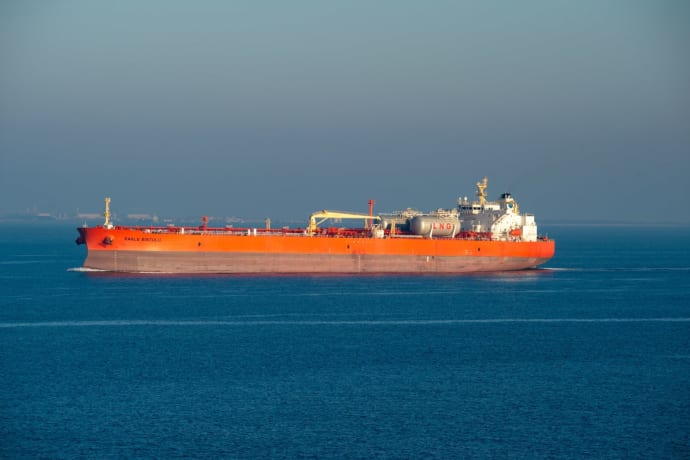
The shipping story is equally important. United Kingdom Maritime Trade Operations reported that one tanker was struck by a drone near Sohar anchorage in Oman and another was damaged moving through the Strait of Hormuz. More attacks this month threaten the recovery in Middle East crude exports seen in September. For oil markets, attacks near key maritime corridors can matter as much as direct production disruptions because they affect insurance, routing, shipping availability, and buyer confidence.
None of these risks changed because of the Russia-Ukraine ceasefire discussion. A potential agreement on energy facilities does not extend to the Red Sea or the Gulf shipping lanes. That distinction is why Brent has not simply collapsed on the diplomatic headline. The market may be willing to remove some war-related premium in one region, but it is not yet ready to ignore active maritime and regional security threats elsewhere.
Gulf Output Return Pressures WTI
WTI faces a different near-term supply dynamic. Shell, Chevron and BP were redeploying personnel after Hurricane Isaias made landfall Saturday. As Gulf of Mexico production returns, the supply story that helped support WTI late last week is fading. That puts more pressure on the U.S. benchmark compared with Brent.
This divergence is visible in the focus on the WTI-Brent spread. Goldman Sachs said high U.S.-Europe shipping costs have widened the spread. The bank raised its December Brent forecast to $90 per barrel from $85 and estimated the geopolitical risk premium at just over $20 per barrel. It also forecast WTI at $81 in December 2026 and $73 in 2027.
For traders, the WTI pivot at $91.21 controls the week. Buyers are taking offers above that level, which means price action around it may define short-term sentiment. If WTI can hold above $91.21, buyers may continue to defend the market despite returning Gulf supply. If the pivot fails, attention shifts to the next support zone at $83.71 to $81.69.
Market Outlook for Brent and WTI
The crude market is not trading a single story. It is trading several overlapping risks at once. Diesel supply announcements and ceasefire hopes are bearish or at least cooling influences. Hormuz shipping threats, Saudi airport attacks, and uncertainty around implementation keep the bullish risk premium alive. Returning Gulf of Mexico output adds another near-term pressure point, especially for WTI.
For Brent, $99.80 is the key support area beneath the market. Holding that pivot would suggest traders still see the geopolitical risk premium as justified. A break would expose $94.41 and $93.68, where the technical picture could shift more decisively. On the upside, a move through $105.92 would put $113.14 in view.
For WTI, $91.21 is the level to watch. The market’s ability or failure to hold that pivot may define whether buyers can absorb the impact of returning Gulf supply. If sellers gain control below that level, $83.71 to $81.69 becomes the next major support area. FXCOINZ market coverage will continue to track whether physical flows, diplomatic verification, and shipping security confirm or challenge the current pricing structure.
Frequently Asked Questions (FAQs)
Why is Brent crude still supported despite ceasefire hopes?
Brent remains supported because the ceasefire discussion has not removed the risks tied to Middle East shipping routes, Saudi attacks, and incidents near the Strait of Hormuz. Traders are also waiting for clearer confirmation that any agreement on energy facilities will be implemented.
What is the key Brent level to watch this week?
The key Brent pivot is $99.80. If buyers defend that level, the risk-premium trade remains intact. If it fails as support, Brent could become vulnerable to a move toward $94.41 and $93.68.
What would turn Brent’s minor trend lower?
A trade through $93.68 would change Brent’s minor trend to down and shift momentum to the downside. That level is being watched closely by technical traders.
What upside level matters for Brent?
A trade through $105.92 would put $113.14 on the radar. That scenario would likely require buyers to remain focused on geopolitical risk and supply vulnerability.
Why did gasoil futures fall?
Gasoil futures dropped 3% to $1,436 per barrel after Trump announced Russian diesel heading for global markets. The announced volumes may ease some tightness, though they are not enough on their own to rebalance global diesel markets.
How much Russian diesel was announced?
The announced volumes were more than 300,000 metric tons immediately, another 500,000 metric tons in November, and 1 million metric tons after that.
Why is WTI under more near-term pressure?
WTI is facing pressure because Gulf of Mexico production is returning after Hurricane Isaias. Shell, Chevron and BP were redeploying personnel, reducing the supply concern that had supported WTI late last week.
What is the key WTI pivot?
WTI’s key pivot is $91.21. If buyers hold the market above that level, sentiment may remain firmer. If it fails, the next support sits at $83.71 to $81.69.
Do Middle East shipping risks affect both Brent and WTI?
Yes, but Brent is typically more directly sensitive to international seaborne supply risks. Attacks near Sohar anchorage in Oman and through the Strait of Hormuz can affect the global risk premium by raising concerns about crude flows, shipping costs, and export reliability.