
What to Know
- Kalshi has launched a U.S. Midterms Hub showing real-time market odds for individual Senate and House races ahead of November’s elections.
- The hub combines live betting prices with polling averages, Federal Election Commission fundraising data, curated news, and race-level information.
- Kalshi says the product is designed as a one-stop election forecasting destination for state and federal races.
- The rollout comes as the platform seeks regulatory approval from the Commodity Futures Trading Commission to expand perpetual contracts outside crypto.
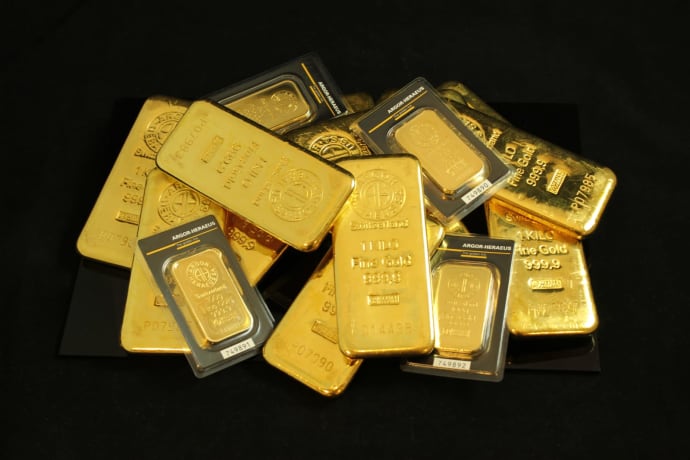
- Kalshi is seeking approval to offer perpetual contracts tied to gold, silver, and platinum.
- The company posted $31 billion in total notional trading volume in June, a more than 70% increase from May.
- Sports contracts accounted for around 85% of Kalshi’s June trading, while World Cup-specific volume accounted for $22.42 billion.
- Kalshi has also been linked to a possible capital raise at a valuation of about $40 billion, compared with a $22 billion valuation targeted in its previous funding round.
Kalshi Builds a New Election Odds Dashboard
Kalshi is pushing further into political prediction markets with the launch of its U.S. Midterms Hub, a new dashboard built to display real-time market odds for individual U.S. Senate and House of Representatives races ahead of November’s elections. The product is intended to give users a centralized view of how speculators are pricing political outcomes as campaign dynamics shift, fundraising numbers update, and polling averages move through the election cycle.
The hub shows live betting prices across a map of the U.S., allowing users to compare market-implied expectations by race. Kalshi is positioning the tool as a broader election intelligence product rather than simply a list of contracts. Alongside market odds, the Midterms Hub includes polling averages, Federal Election Commission fundraising reports for individual candidates, and curated news and analysis from various outlets.
For prediction market users, the combination of live pricing and political data is central to the appeal. Betting prices can move quickly when traders react to fresh polling, campaign finance disclosures, candidate developments, or changes in the national political environment. By placing those inputs alongside market odds, Kalshi is aiming to make the hub a reference point for users who want to track both the statistical and speculative sides of the election landscape.
Political Markets Become a Larger Focus
The Midterms Hub is the latest step in Kalshi’s effort to increase its political footprint ahead of November. The company introduced the American Power Index in May, describing it as an S&P 500 for politics, with the goal of tracking which political party is gaining or losing ground. That initiative signaled a broader strategy to treat political momentum as something that can be measured, packaged, and followed in a market-style format.
Election contracts have long been one of the most visible categories in prediction markets because they turn uncertain political outcomes into tradable probabilities. Supporters of these markets often argue that prices can aggregate the expectations of many participants and may update faster than traditional commentary. Critics tend to focus on regulatory, ethical, and market-structure questions, particularly when contracts involve sensitive public events. Kalshi’s latest product arrives in that larger debate, as political odds become more visible to mainstream audiences.
Kalshi’s framing of the Midterms Hub as a one-stop shop underscores how prediction markets are competing not only with each other, but also with polling aggregators, campaign trackers, and financial-style dashboards. For users, the key question is whether live prices provide a meaningful signal beyond surveys and fundraising reports. For the platform, the launch offers a way to deepen engagement around a major U.S. political cycle while placing its markets at the center of election discussion.
Commodity Ambitions Add Another Dimension
Kalshi’s political expansion is unfolding alongside a separate push into financial derivatives tied to precious metals. The platform is seeking regulatory approval from the Commodity Futures Trading Commission to expand perpetual contracts beyond crypto and into metals including gold, silver, and platinum. Perpetual contracts are derivative instruments that do not expire, making them popular among traders who want continuous exposure without rolling traditional futures contracts at set expiration dates.
If approved, the move would mark a notable expansion of Kalshi’s product range. Crypto perpetuals are already familiar to many digital asset traders, but applying that structure to gold, silver, and platinum would bring the platform closer to traditional commodity markets. Gold and silver, in particular, have long histories as monetary and industrial assets, while platinum is closely watched by traders for its role in industrial demand and precious metals portfolios.
The regulatory dimension is central. Kalshi’s ability to add new products depends on approval from the Commodity Futures Trading Commission, and any expansion into precious metals would need to satisfy the relevant market oversight requirements. Market participants will be watching whether the platform can extend its contract model into commodities while maintaining the compliance framework required for regulated event and derivatives markets.
Trading Volumes Strengthen the Growth Story
The push into politics and potential metals contracts comes after a sharp rise in trading activity on the platform. Kalshi posted $31 billion in total notional trading volume in June, representing a more than 70% jump from May. That increase highlights how quickly prediction market activity can scale when major event categories attract active participation.
Sports contracts were the largest driver of that activity, accounting for around 85% of Kalshi’s trading during June. World Cup-specific volume on the platform accounted for $22.42 billion, showing how high-profile global events can dominate notional volume when users concentrate around a widely followed outcome set. While political markets are different from sports markets in both structure and public significance, the numbers show that Kalshi has been able to generate substantial user activity around event-driven contracts.
For investors and regulators alike, those volumes matter. High notional turnover can support the case that prediction markets are becoming a more important part of the broader trading ecosystem. At the same time, rapid growth raises questions about market integrity, risk controls, contract design, and user behavior. As Kalshi expands its product suite, the platform’s ability to manage that growth may become as important as the categories it chooses to list.
Funding Talks Point to Lofty Expectations
Kalshi has also been linked to a possible capital raise at a valuation of about $40 billion, nearly doubling the $22 billion valuation it targeted in its previous funding round. That potential valuation reflects strong expectations for the future of prediction markets, especially as platforms broaden their offerings across politics, sports, crypto-linked contracts, and potentially commodities.
A valuation of about $40 billion would place significant pressure on the company to keep expanding both usage and product diversity. The Midterms Hub supports the user-engagement side of that equation by turning election coverage into an interactive market experience. The metals contract effort supports the product-expansion side by potentially giving traders exposure to established commodities through a perpetual format.
Still, the path forward remains dependent on regulation, market adoption, and public trust. Prediction markets are built on confidence that prices reflect real participant expectations and that contracts settle clearly. As Kalshi moves into more politically sensitive and financially significant areas, its execution will be closely watched across trading, policy, and media circles.
Why the Metals Push Matters for Commodity Traders
The planned expansion into gold, silver, and platinum contracts could be significant because precious metals sit at the intersection of macroeconomic trading, industrial demand, and investor hedging. Gold often draws attention when traders assess inflation, interest-rate expectations, currency strength, and geopolitical risk. Silver combines precious metal characteristics with industrial uses, while platinum is linked to industrial demand and supply dynamics.
Perpetual contracts would offer a different access point from conventional futures or spot market exposure. Because perpetuals do not expire, traders can maintain exposure without managing contract roll dates. That structure can be attractive, but it also requires careful design around pricing, funding mechanics, liquidity, and risk management. Regulatory approval would therefore be more than a formality; it would determine whether Kalshi can bring a crypto-style derivatives format into precious metals under a regulated framework.
For now, the metals initiative remains a proposal seeking approval, while the Midterms Hub is the live product shaping Kalshi’s immediate public profile. Together, the developments show a platform trying to broaden its identity from a prediction market operator into a wider event and derivatives venue. Whether that strategy succeeds will depend on how users respond to political tools, how regulators view new contract categories, and whether trading volumes remain strong beyond headline-driven events.
Frequently Asked Questions (FAQs)
What did Kalshi launch for the U.S. midterm elections?
Kalshi launched a U.S. Midterms Hub that displays real-time market odds for individual Senate and House races ahead of November’s elections.
What information is included in the Midterms Hub?
The hub includes live betting prices, polling averages, Federal Election Commission fundraising data, curated news, and analysis related to individual races.
Why is Kalshi expanding its political tools?
Kalshi is seeking to position itself as a primary reference for election odds by combining market pricing with traditional political data in one dashboard.
What commodity products is Kalshi seeking approval to offer?
Kalshi is seeking regulatory approval to expand perpetual contracts into precious metals, specifically gold, silver, and platinum.
Which regulator is involved in Kalshi’s proposed contract expansion?
The Commodity Futures Trading Commission is the regulator tied to Kalshi’s effort to expand perpetual contracts beyond crypto and into precious metals.
How large was Kalshi’s June trading volume?
Kalshi posted $31 billion in total notional trading volume in June, a more than 70% increase from May.
What drove most of Kalshi’s June trading activity?
Sports contracts accounted for around 85% of Kalshi’s June trading, and World Cup-specific volume accounted for $22.42 billion.
What valuation has Kalshi been linked to in potential funding discussions?
Kalshi has been linked to a potential capital raise at a valuation of about $40 billion, compared with a $22 billion valuation targeted in its previous funding round.
Is the precious metals expansion already approved?
No. The expansion into gold, silver, and platinum perpetual contracts is still described as seeking regulatory approval.