
What to Know
- The Federal Reserve is expected to keep interest rates unchanged, with markets fully pricing in a policy “hold” decision
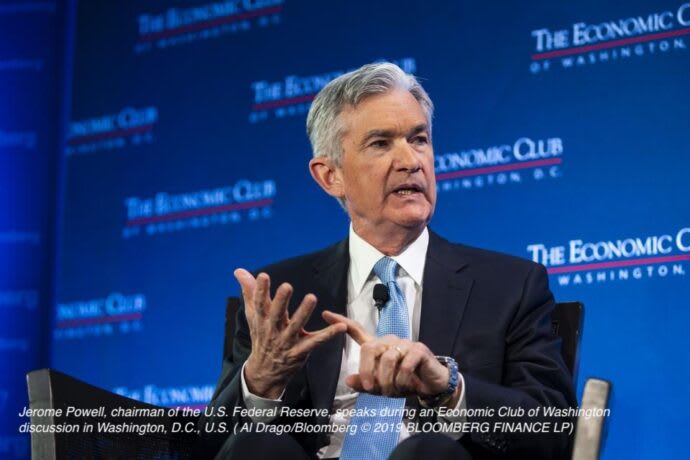
- Focus will shift from the rate decision to Fed Chair Jerome Powell’s forward guidance and press conference remarks
- Inflation remains a key concern, with recent energy price volatility adding pressure to the Fed’s policy outlook
- This meeting could be one of Jerome Powell’s final appearances as Fed Chair, adding uncertainty to the policy outlook.
The Federal Reserve is heading into one of its most closely watched meetings of the year, with markets almost fully pricing in an unchanged interest rate decision as policymakers continue to assess the broader economic impact of rising geopolitical tensions and inflation risks.
Attention is not only focused on the rate decision itself, but also on what could potentially be the final Federal Open Market Committee meeting chaired by Jerome Powell, adding a layer of political and institutional uncertainty to an already sensitive macro environment.
Market Expectations Locked on a Rate Hold
Financial markets are overwhelmingly expecting the Fed to keep its benchmark interest rate unchanged in the current range of 3.50% to 3.75%, according to pricing from futures markets.
This reflects a broader “wait-and-see” stance from policymakers, who are increasingly reluctant to adjust monetary policy until clearer economic signals emerge from ongoing geopolitical developments, particularly the conflict involving Iran and its impact on global energy markets.
The Federal Reserve is effectively balancing two competing pressures: inflation risks driven by higher energy prices on one side, and potential economic slowdown risks caused by uncertainty and weaker business sentiment on the other.
Inflation Risks vs Growth Concerns
The escalation in geopolitical tensions has already had a noticeable impact on energy markets, with higher oil prices feeding directly into inflation expectations. At the same time, uncertainty in global trade routes and supply chains is creating caution among businesses, which could slow hiring and investment.
This creates a policy dilemma for the Fed. Keeping rates higher for longer helps contain inflation but risks slowing economic growth further. Cutting rates would support employment and demand but could worsen inflationary pressures if energy prices remain elevated.
Chair Jerome Powell is expected to address this tension directly in his post-meeting press conference, where markets will be looking for signals about how the Fed interprets current risks.
Powell’s Potential Final FOMC Meeting
Beyond monetary policy, this meeting carries institutional significance. It may mark the final FOMC meeting chaired by Jerome Powell, whose current term is set to end in May.
While his leadership term concludes soon, his position on the Federal Reserve Board technically extends beyond that, creating uncertainty over how long he will remain in an active governing role.
Under normal conditions, transitions at the top of the Fed are orderly, but recent political and legal developments have complicated the process. This includes investigations surrounding Fed operations, which were recently dropped or reassigned, adding further uncertainty to the leadership transition.
Markets are also watching closely as a potential successor, Kevin Warsh, moves through the confirmation process, with expectations that policy direction could shift once leadership changes.
Policy Outlook Remains “On Hold”
Despite leadership uncertainty, the near-term policy message remains unchanged. Economists broadly expect the Fed to maintain a stable stance, avoiding any immediate rate adjustments until there is greater clarity on inflation trends and economic resilience.
Some analysts expect Powell’s tone to reinforce this stance, emphasizing patience and data dependence rather than signaling any near-term policy shift.
This reinforces the current market environment where monetary policy is effectively in pause mode, with external macro events—rather than central bank action—driving volatility across financial markets.
What Comes Next for Markets
The focus now shifts to Powell’s press conference, where traders will look for clarity on three key areas: inflation expectations, the economic impact of geopolitical tensions, and any indication of how leadership transition might affect future policy direction.
Until then, markets are likely to remain in a reactive state, with rate expectations anchored and volatility driven primarily by external geopolitical developments rather than domestic monetary policy changes.
Frequently Asked Questions (FAQs)
Will the Fed cut interest rates at this meeting?
No, markets are pricing in a high probability that the Federal Reserve will keep rates unchanged.
Why is this Fed meeting important?
Even though rates are expected to stay the same, investors are focused on Powell’s guidance on inflation, growth, and future policy direction.
How does inflation affect the Fed’s decision?
Higher inflation—especially from rising energy prices—reduces the likelihood of rate cuts and can keep policy tighter for longer.
What markets are most affected by Fed decisions?
Forex (especially USD pairs), stock indices, bonds, gold, and crypto are all highly sensitive to Fed policy changes.
Read more: How the Federal Reserve’s Rate Cuts Impact Bitcoin and the Broader Cryptocurrency Market
Is this really Powell’s last meeting as Fed Chair?
It may be one of his final meetings, depending on the timing of leadership transition and confirmation of a successor.