
What to Know
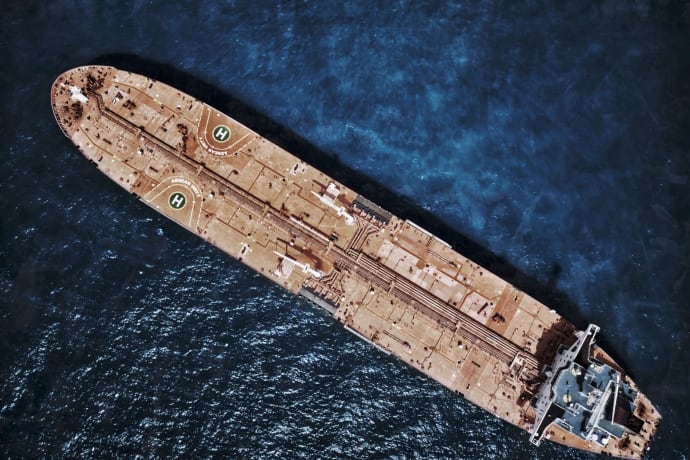
- U.S. forces struck three Iranian oil tankers Saturday and destroyed one near Kharg Island, Iran’s primary export terminal.
- Iran said its navy hit three tankers using unauthorized routes in the Strait of Hormuz and also targeted U.S. vessels in other waters.
- The conflict is in its seventh month, and the latest exchanges were the heaviest since July.
- Washington said it would not negotiate until Iran stops attacking ships, limiting hopes for near term de escalation.
- Only two commodity vessels crossed the Strait of Hormuz on Saturday, while six made it through Sunday and four crossed Thursday.
- The ten day average for Hormuz traffic is near ten ships per day, the lowest since May and below the recent pace near fifteen.
- Iran said it plans to announce a restricted zone outside the strait in the coming days, beginning at the U.S. naval line and extending into the Persian Gulf.
- OPEC+ met Sunday and left October production unchanged, saying new quotas need to be set before any further changes.
- Commercial crude inventories fell by four point five million barrels last week, the first draw in five weeks and larger than market expectations.
- Refineries ran at ninety eight percent capacity, a rate not reached by the industry since twenty eighteen.
- Average U.S. diesel prices reached a record near five dollars and eighty five cents a gallon as fuel markets faced pressure from Middle East disruptions and Ukrainian attacks on Russian refineries.
Crude Risk Premium Stays Firm After Tanker Attacks
Oil markets opened the week with buyers still holding the advantage as the conflict around Persian Gulf shipping moved deeper into commercial tanker territory. U.S. forces struck three Iranian oil tankers Saturday and destroyed one near Kharg Island, Iran’s primary export terminal. Iran, meanwhile, said its navy hit three tankers using unauthorized routes in the Strait of Hormuz and also targeted U.S. vessels in other waters. For WTI and Brent, the immediate implication is clear: barrels linked to the Persian Gulf are moving through a more dangerous operating environment, and that keeps a supply risk premium embedded in crude prices.
The fighting is now in its seventh month, and the latest exchanges were described as the heaviest since July. That timing matters because oil markets often price not only physical disruption, but also the chance that disruption broadens. When commercial vessels become targets, traders tend to reassess the cost of moving crude, the willingness of shipowners to enter contested waters, and the risk that cargo schedules become less reliable. Even if outright production is not immediately reduced, uncertainty around export routes can be enough to keep futures supported.
Hormuz Traffic Weakness Reinforces Supply Anxiety
The Strait of Hormuz remains the core focus for energy traders because it is one of the most important maritime corridors for oil and commodity flows. Traffic through the strait has already slowed materially. Only two commodity vessels crossed on Saturday, six made it through Sunday, and four crossed Thursday. The ten day average is running near ten ships per day, the lowest since May and well below the recent pace near fifteen. Those figures suggest shipping behavior is already changing in response to the security backdrop.
Lower vessel traffic does not automatically mean every missing ship represents lost supply, but it does increase concern over timing, availability, freight risk and insurance costs. In crude markets, reliability is a pricing factor. Refiners and importers want confidence that contracted barrels will arrive as scheduled. When fewer vessels move through a key corridor and the navigable space appears likely to narrow, buyers often become less willing to bet aggressively against prices. That is why the latest Hormuz data strengthened the bullish tone around WTI and Brent.
Iran said it plans to announce a restricted zone outside the strait in the coming days, starting at the U.S. naval line and pushing into the Persian Gulf. A smaller corridor, combined with fewer ship crossings, is not the type of development that removes risk premium from crude. Instead, it raises the possibility of more congestion, more delays and more friction around cargo movement. Market participants are therefore treating the shipping data as a live indicator of supply stress, not merely as a headline risk.
OPEC+ Leaves October Production Unchanged
OPEC+ had one obvious way to counter the disruption trade: signal more barrels. The group did not do so. OPEC+ met Sunday and left October production unchanged, saying new quotas need to be set before any additional changes. For crude buyers, that decision removed a potential bearish offset at a moment when tanker traffic through Hormuz is falling week over week and Iran is preparing a restricted zone that could shrink the corridor further.
The decision does not mean OPEC+ is ignoring the market. It means the group is choosing quota structure and supply discipline over an immediate response to geopolitical risk. For price action, that distinction matters. When shipping risks are rising and producer policy stays steady, the market has fewer reasons to strip premium out of WTI and Brent. Some chart watchers may view that combination as a supportive backdrop, particularly if physical indicators continue to point toward tighter availability.
Oil traders also tend to distinguish between supply that exists on paper and supply that can reach consumers without interruption. Even if producers have capacity or policy flexibility, cargoes still need safe transit. With Hormuz flows reduced and commercial tankers under direct threat, the logistics component of the oil market is now carrying greater weight. OPEC+ restraint therefore lands in a market already sensitive to every signal from the Gulf.
Inventory Draw Adds Fundamental Support
The weekend escalation did not arrive in a weak fundamental setting. Commercial crude stocks fell by four point five million barrels last week, marking the first draw in five weeks and coming in larger than market expectations. That inventory decline already gave WTI a firmer floor before the latest tanker strikes. When stockpiles draw while geopolitical risk is rising, the market often becomes more reluctant to sell because the cushion against disruption appears thinner.
Refinery activity added to the supportive picture. Refineries ran at ninety eight percent capacity, a rate the industry has not reached since twenty eighteen. High refinery utilization implies strong crude demand from processing facilities. It can also accelerate inventory draws when crude inputs remain elevated. For traders, that creates a feedback loop: strong refinery runs pull crude from storage, lower inventories reduce the buffer against shipping disruptions, and geopolitical risk raises the value of barrels that are already available.
This is why the crude market was already leaning constructive before the weekend. The strikes did not create the entire bullish argument; they intensified it. WTI had support from the inventory data and refinery run rate, while Brent remained sensitive to the Persian Gulf security picture. Together, those factors helped keep buyers in control.
Diesel Market Tightness Extends the Oil Rally Narrative
Diesel is reinforcing the same message from the refined products side. Average U.S. diesel prices reached a record near five dollars and eighty five cents a gallon. The fuel market is being squeezed from more than one direction, with Middle East disruptions affecting shipping and Ukrainian attacks on Russian refineries adding pressure to the supply chain. Diesel matters because it is heavily tied to freight, farming, construction and industrial activity, so price stress in that market can influence broader inflation and energy sentiment.
When diesel prices reach records while crude inventories are drawing and refinery runs are already extremely high, the market sees limited room for easy relief. Refineries are operating hard, yet product pressure remains evident. That complicates the bearish case for crude because stronger product values can support refinery margins and maintain demand for feedstock barrels. In other words, high diesel prices can help keep crude demand resilient even when headline crude prices are already carrying a geopolitical premium.
Market Outlook for WTI and Brent
For now, the crude outlook remains dominated by supply risk, logistics stress and disciplined producer policy. WTI and Brent are not moving solely on one event. The bullish structure is being built from several linked factors: tanker strikes, reduced Hormuz traffic, a possible restricted zone near the Persian Gulf, unchanged OPEC+ output for October, falling commercial inventories and record diesel prices. Each factor supports the idea that buyers have a stronger argument than sellers in the near term.
That does not mean oil prices can only move higher. Any sign that Hormuz traffic normalizes, that negotiations reopen, or that producer policy shifts could soften the risk premium. However, Washington has said it would not negotiate until Iran stops attacking ships, which keeps the diplomatic path constrained. Until the shipping environment becomes safer or supply policy changes meaningfully, market participants are likely to keep treating dips in WTI and Brent as opportunities rather than proof that the disruption trade is over.
Frequently Asked Questions (FAQs)
Why are WTI and Brent being supported by recent events?
WTI and Brent are being supported because tanker attacks, reduced traffic through the Strait of Hormuz, unchanged OPEC+ production, lower commercial crude inventories and record diesel prices are all pointing toward tighter or riskier supply conditions.
What happened near Kharg Island?
U.S. forces struck three Iranian oil tankers Saturday and destroyed one near Kharg Island, which is Iran’s primary export terminal. That raised concern about the security of oil exports linked to the Persian Gulf.
Why is the Strait of Hormuz important for oil markets?
The Strait of Hormuz is a critical corridor for commodity vessels and oil related shipping. When traffic through the strait falls or the corridor appears less secure, traders often price in greater risk around delivery reliability.
How much has Hormuz traffic slowed?
Only two commodity vessels crossed the Strait of Hormuz on Saturday, six crossed Sunday and four crossed Thursday. The ten day average is near ten ships per day, the lowest since May and below the recent pace near fifteen.
What did OPEC+ decide?
OPEC+ met Sunday and left October production unchanged. The group said new quotas need to be set before any additional changes, which means it did not add barrels to offset the disruption premium.
Why do crude inventories matter here?
Commercial crude stocks fell by four point five million barrels last week, the first draw in five weeks and larger than market expectations. Lower inventories reduce the buffer available if shipping disruption worsens.
What role is diesel playing in the oil market?
Average U.S. diesel prices reached a record near five dollars and eighty five cents a gallon. Middle East disruptions and Ukrainian attacks on Russian refineries have squeezed the fuel market, adding support to the broader oil complex.
Could the oil risk premium fade soon?
The risk premium could fade if shipping conditions improve, Hormuz traffic recovers, or producer policy changes. For now, Washington’s refusal to negotiate until Iran stops attacking ships keeps near term de escalation uncertain.